
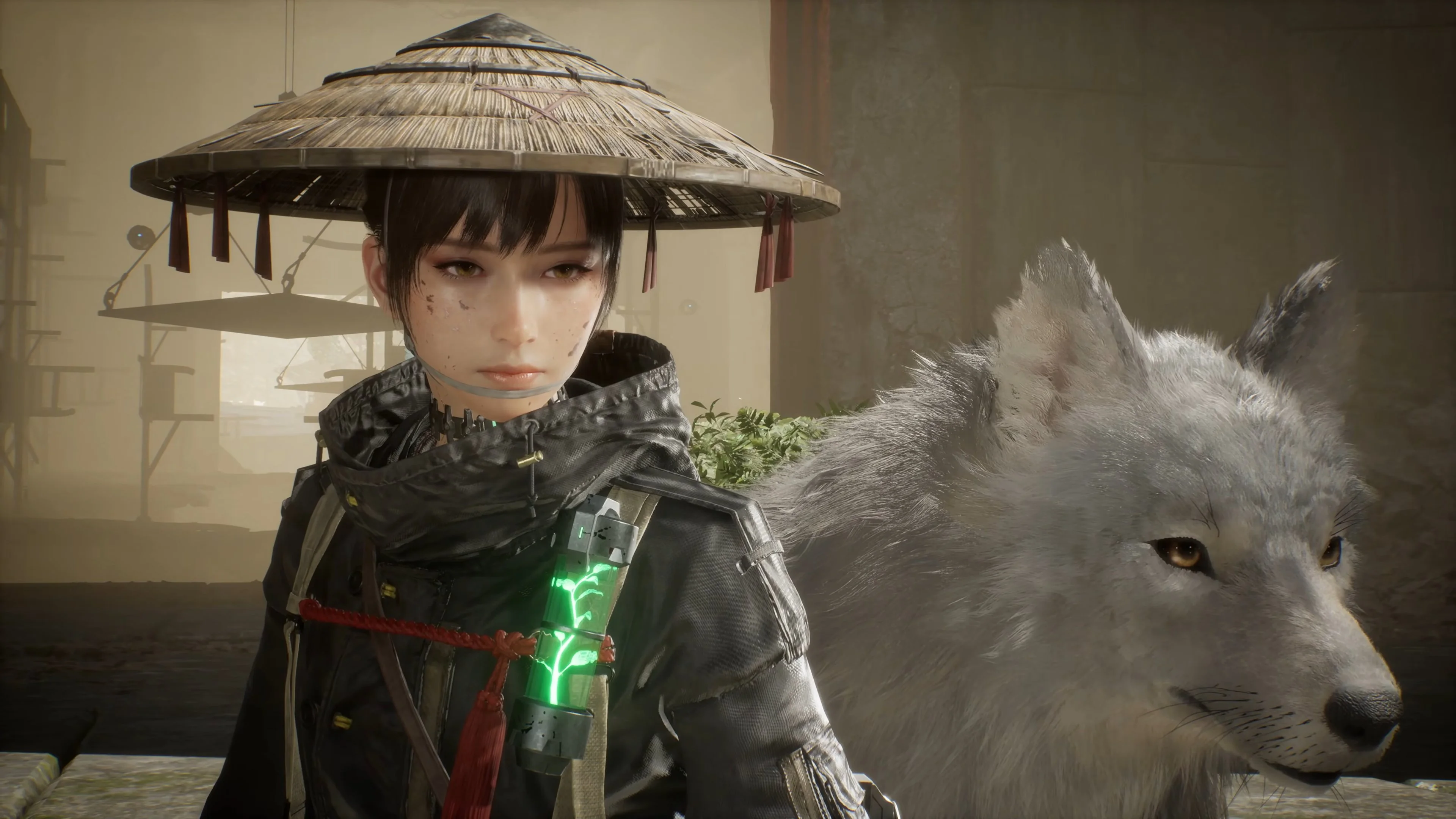
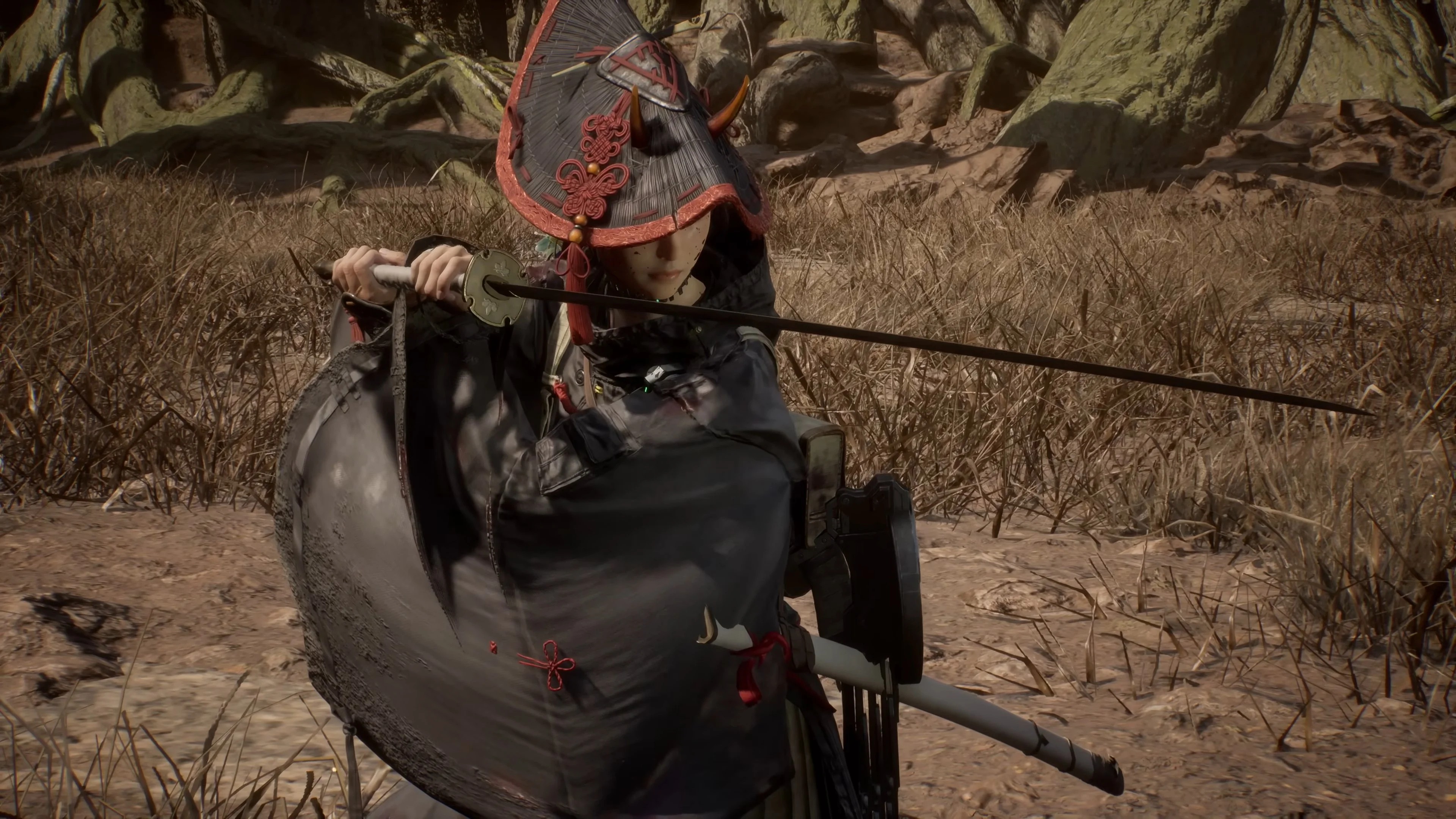
Beast of Reincarnation won me over faster than I expected. Within its opening stretch, I was parrying oversized woodland creatures, sending Koo into fights with supernatural attacks, and swinging Emma's absurdly useful hair across ruined landscapes. The parry has that wonderfully crisp clang that makes you want to pick another fight just to hear it again. For a studio best known for Pokémon, this was a surprisingly confident step into action-RPG territory. And then the novelty started wearing off.
The first few hours make a convincing case that Game Freak has found something special: a Sekiro-inspired combat system with a tactical layer, a companion who actually contributes to fights, and traversal mechanics that make exploring its ruined version of Japan genuinely fun. Sustaining that case for the next thirty-plus hours turns out to be the harder problem. What begins as a promising action RPG gradually settles into a loop of parry, explore, fight another Nushi, sit through another story scene, and do it all again. The combat remains good enough to keep the game moving, but the world surrounding it becomes increasingly difficult to care about.
A World That Looks New and Feels Familiar
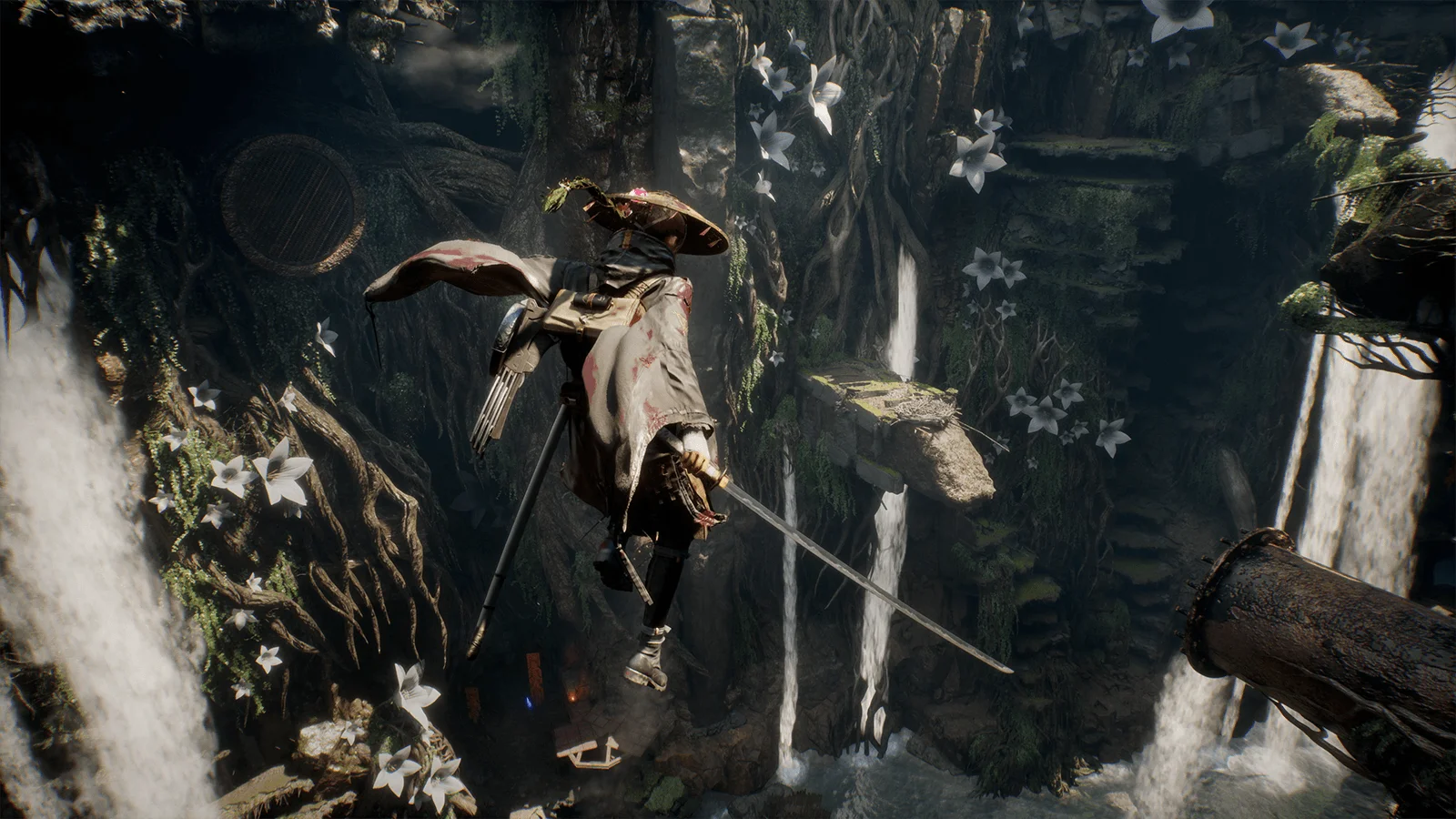
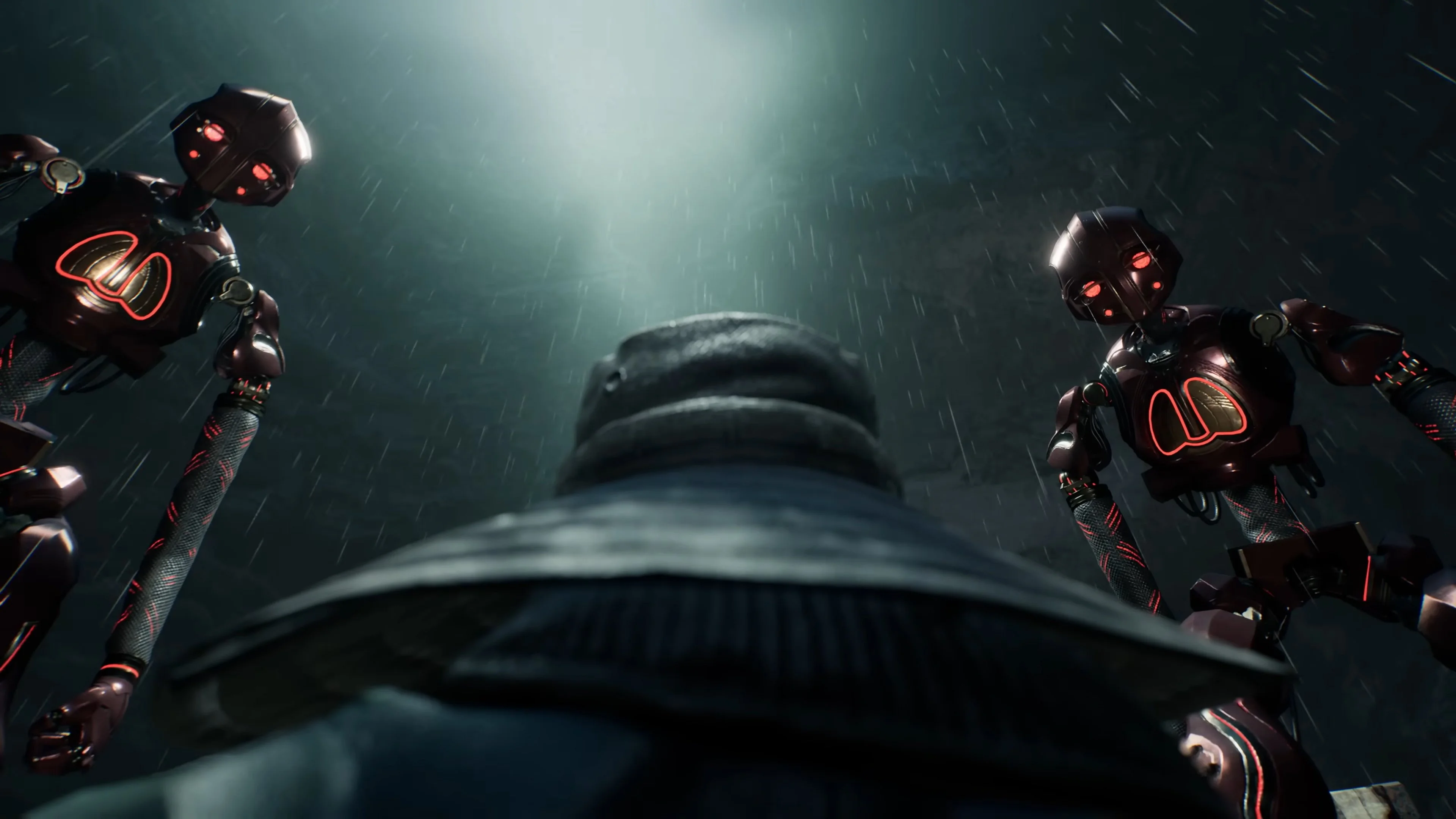
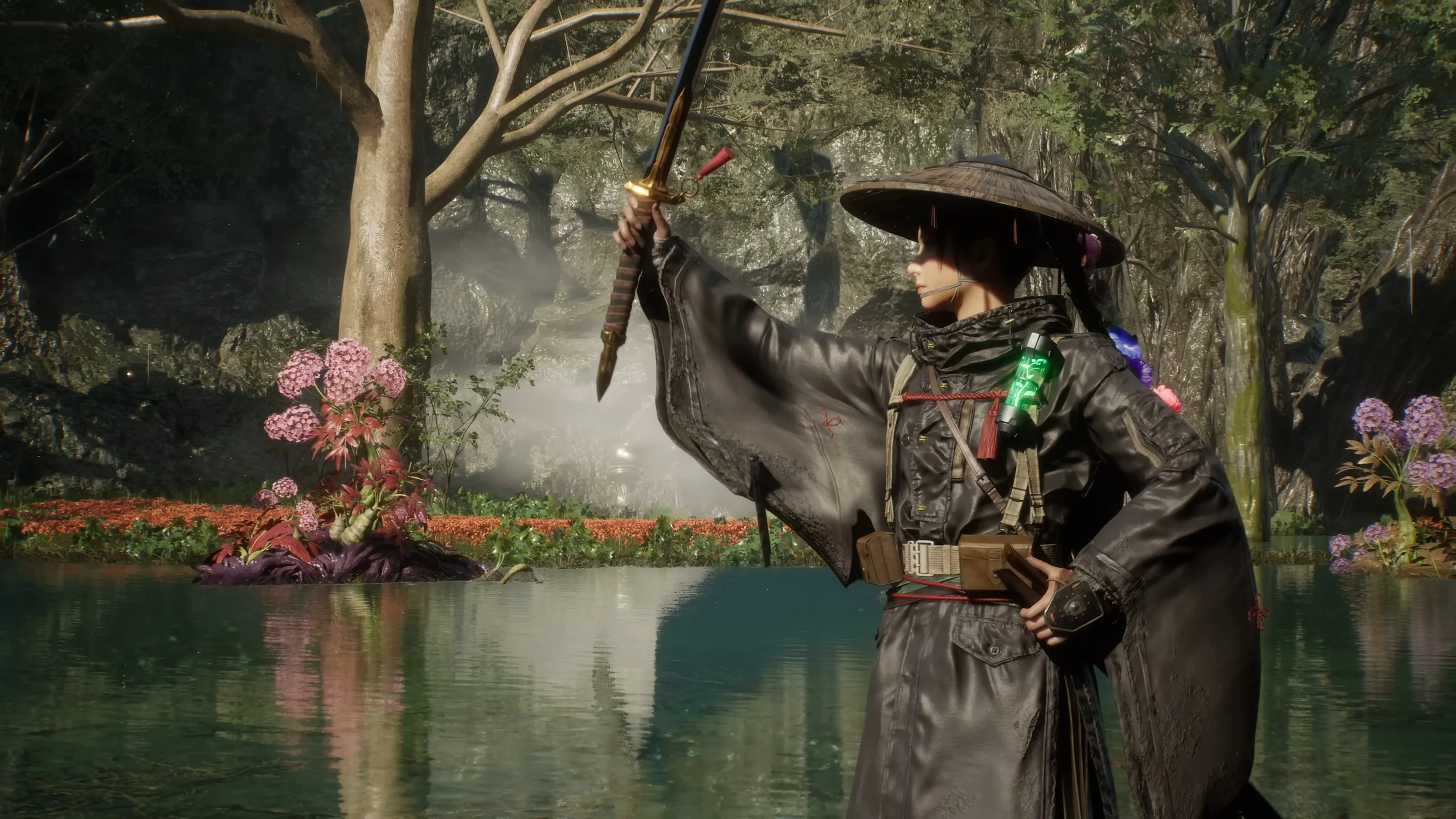
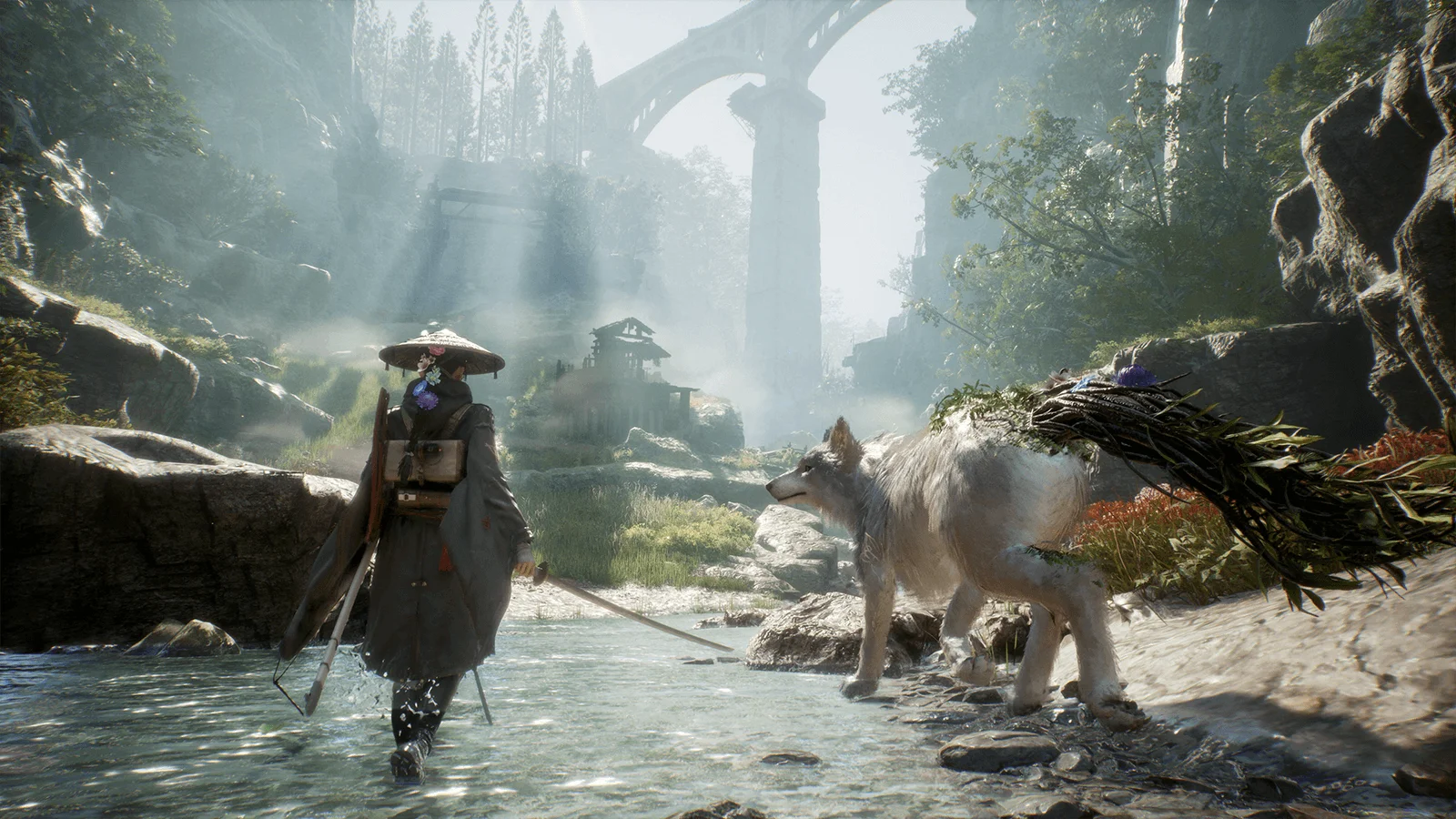
The first thing Beast of Reincarnation gets right is its world. There is something immediately appealing about wandering through a ruined Japan being swallowed by vegetation, with enormous Nushi looming over the landscape and hostile creatures emerging from the Blight. It looks beautiful from a distance. The closer you look, though, the more familiar it becomes.
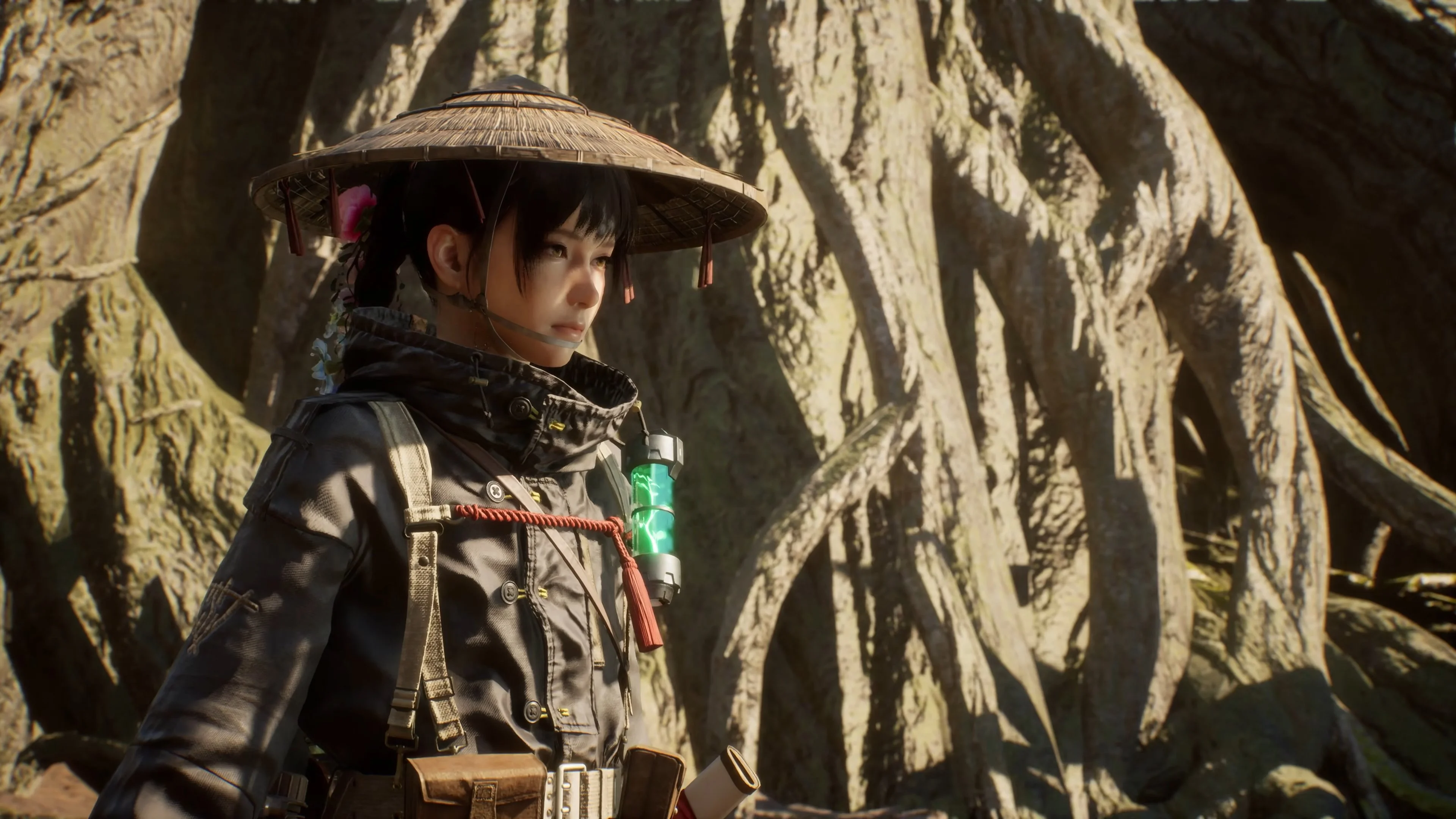
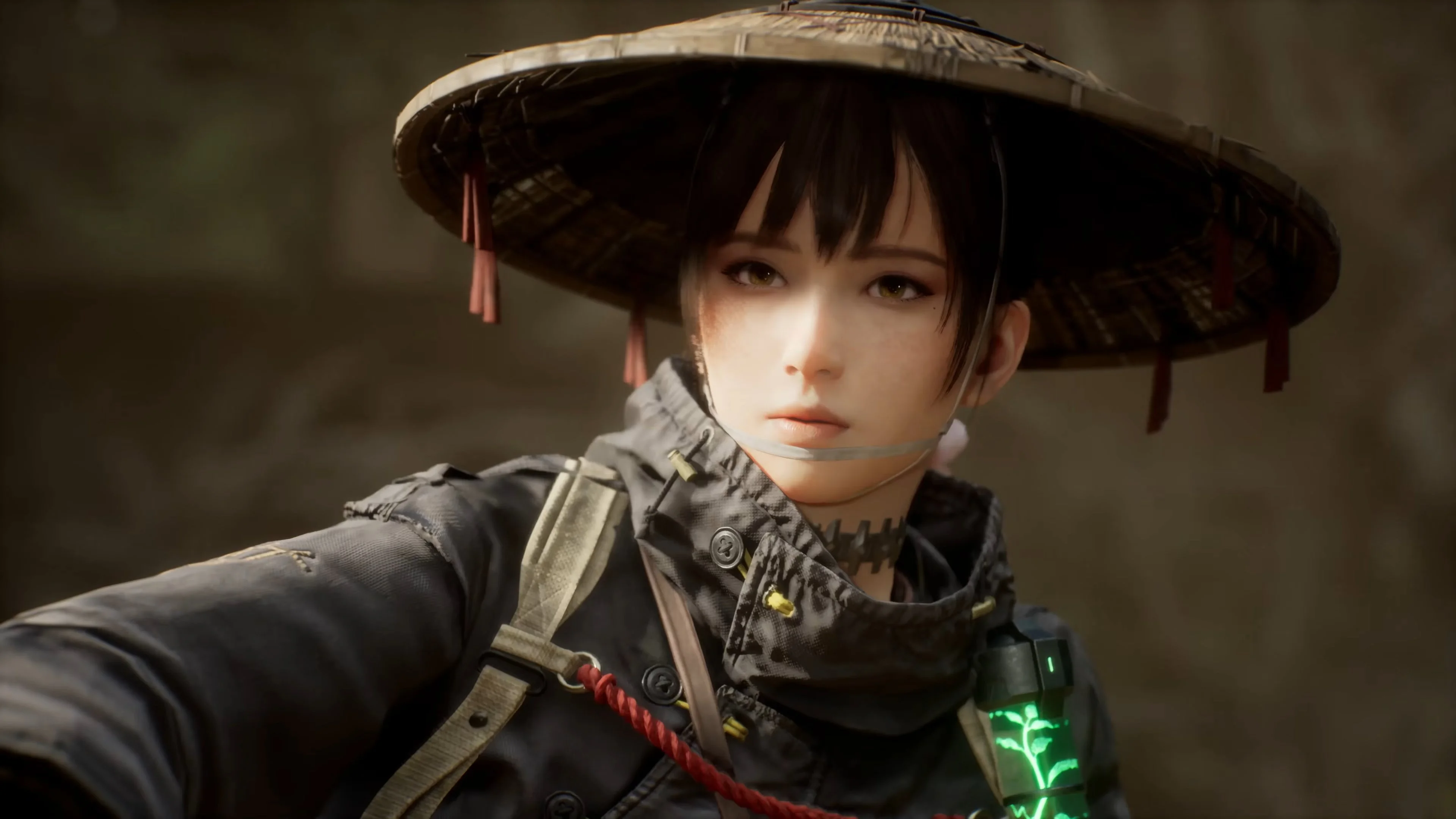
Set in 4026, the game drops Emma — an 18-year-old Purifier with the ability to manipulate plant life — into a Japan overtaken by the Blight. The infection has twisted animals into hostile Malefacts and created the towering Nushi that dominate each region. Emma's mission is to defeat them and ultimately confront the Beast of Reincarnation, with her blight-infected stray companion Koo fighting alongside her.
The setup wears its influences openly. There's NieR: Automata's melancholy, Princess Mononoke's tension between nature and corruption, and a parry-driven combat feel reminiscent of Stellar Blade. None of those comparisons are inherently bad — in fact, the combination is often appealing — but the game rarely pushes those influences far enough to establish a completely distinct identity of its own.
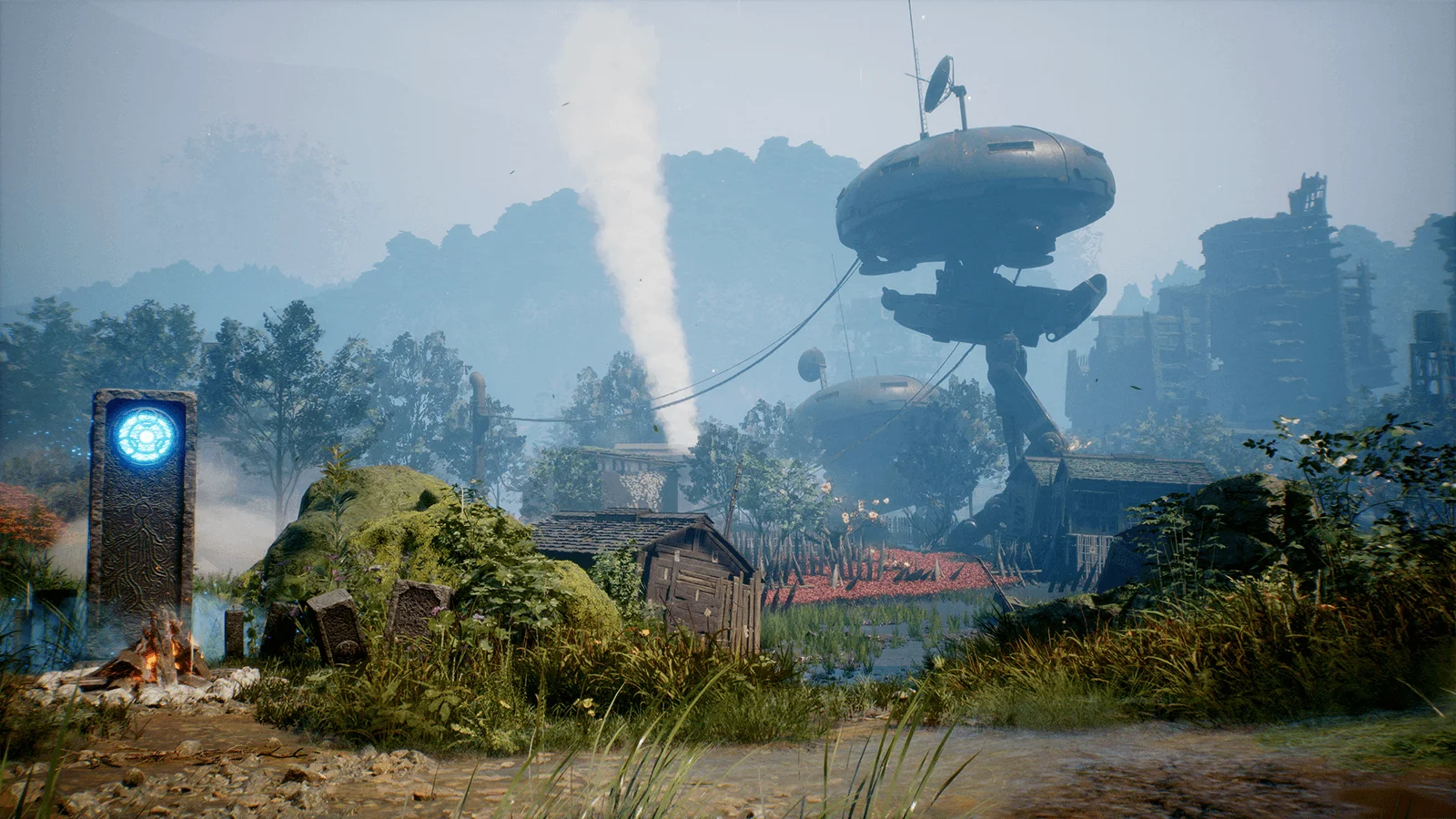
The story's strongest element is Emma herself. She begins almost emotionally blank, and watching her gradually reconnect with other people gives the journey a reason to exist beyond the next boss fight. Characters such as Brad and Kagura help draw that humanity out of her, while fragments of her past gradually fill in the gaps. It's a familiar arc, and the writing rarely digs particularly deep into it, but there is enough sincerity in Emma's journey that it works more often than it doesn't.
The broader story is less successful. Its twists are usually easy to anticipate, its villain never quite earns the importance the game wants him to have, and too many of its quieter moments rely on characters standing around and explaining exactly what the scene is supposed to mean. The result is a story that is rarely offensive, but just as rarely surprising.
The Combat Is the Best Reason to Play This
For the first few hours, I couldn't get enough of it. Beast of Reincarnation understands something fundamental about parry-based combat: a successful deflection needs to feel good. And this one does. Every clean katana clash lands with enough force that I occasionally found myself picking fights I could have avoided just because I wanted to hear that sound again.
At its core, the combat is unmistakably Sekiro-flavored. Emma can parry, dodge, block and break enemy posture with her katana, while well-timed defensive play lets you turn an enemy's aggression against it. The timing is forgiving enough to make the system approachable without completely removing the satisfaction of learning an enemy's attacks. Miss your reads against a Nushi or get surrounded by Malefacts, though, and the game can punish you quickly — a single missed dodge window against a Nushi's follow-up combo can strip a full health bar before you regain control.
Layered on top of that real-time foundation is a tactical, command-based system. Successful parries build Florescence Points (FP), which can then be spent on Koo's special abilities. Depending on how you build and use him, Koo can contribute elemental attacks, status effects and support abilities, giving fights a second layer of resource management without completely interrupting their momentum.
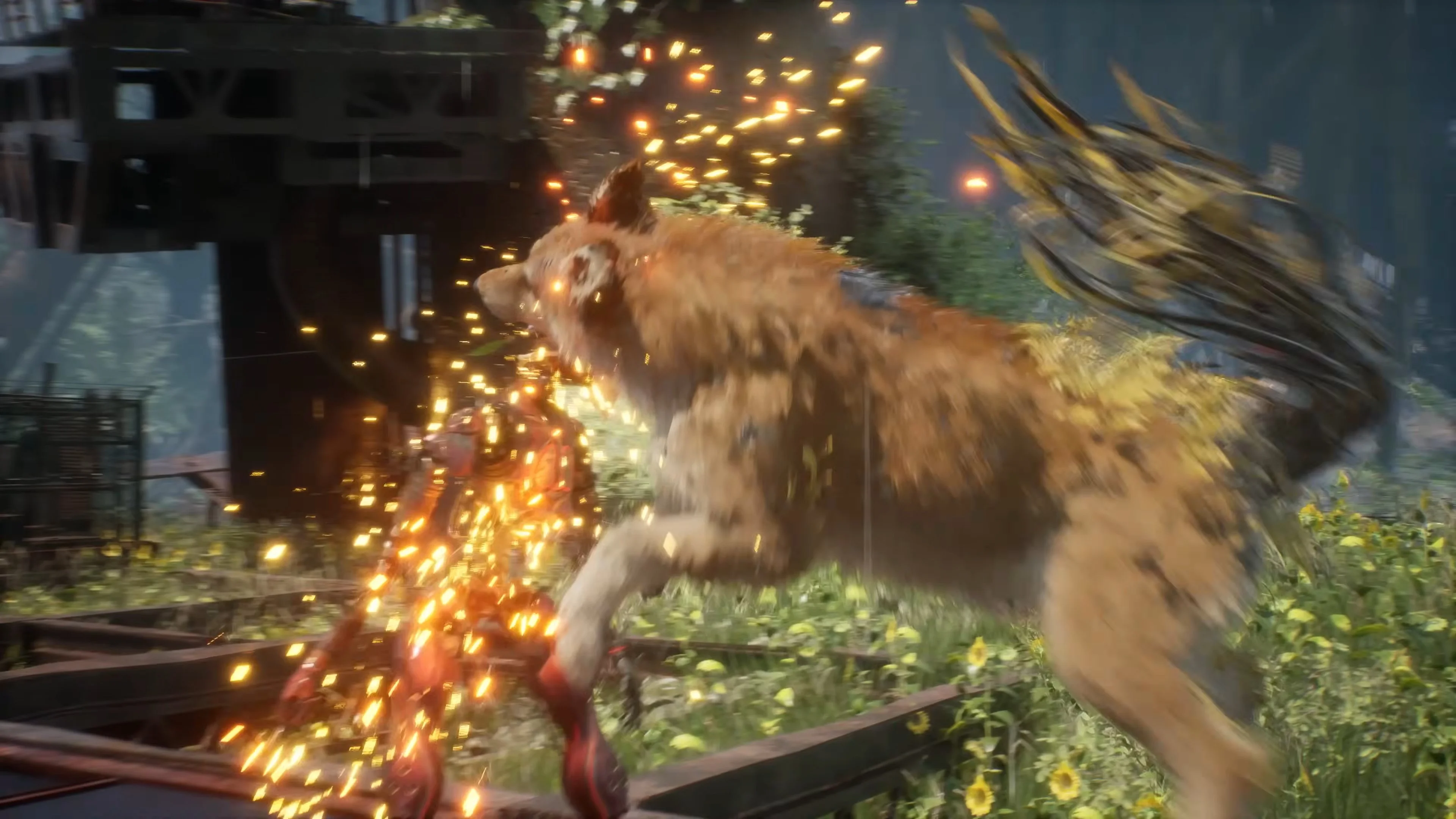
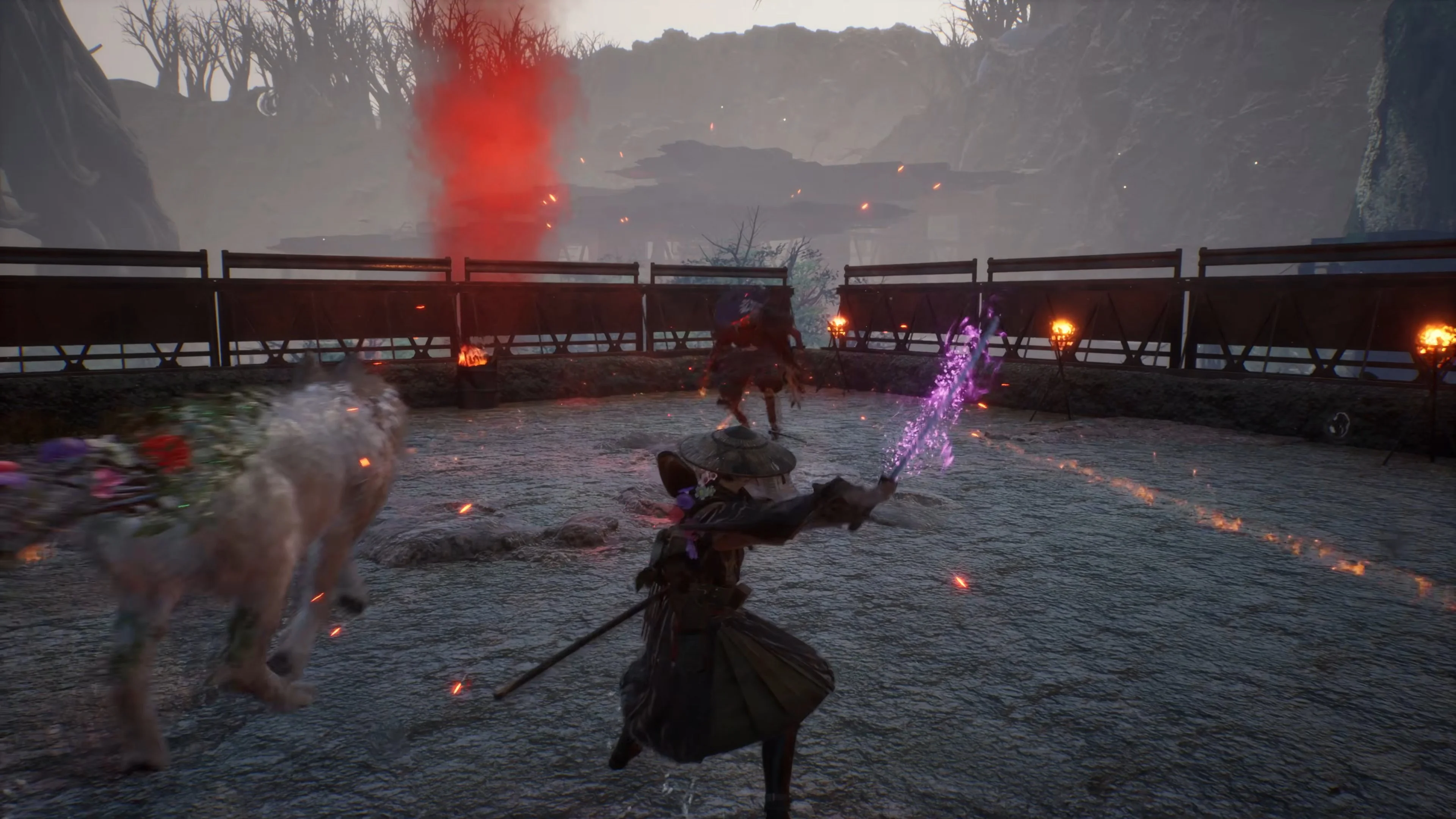
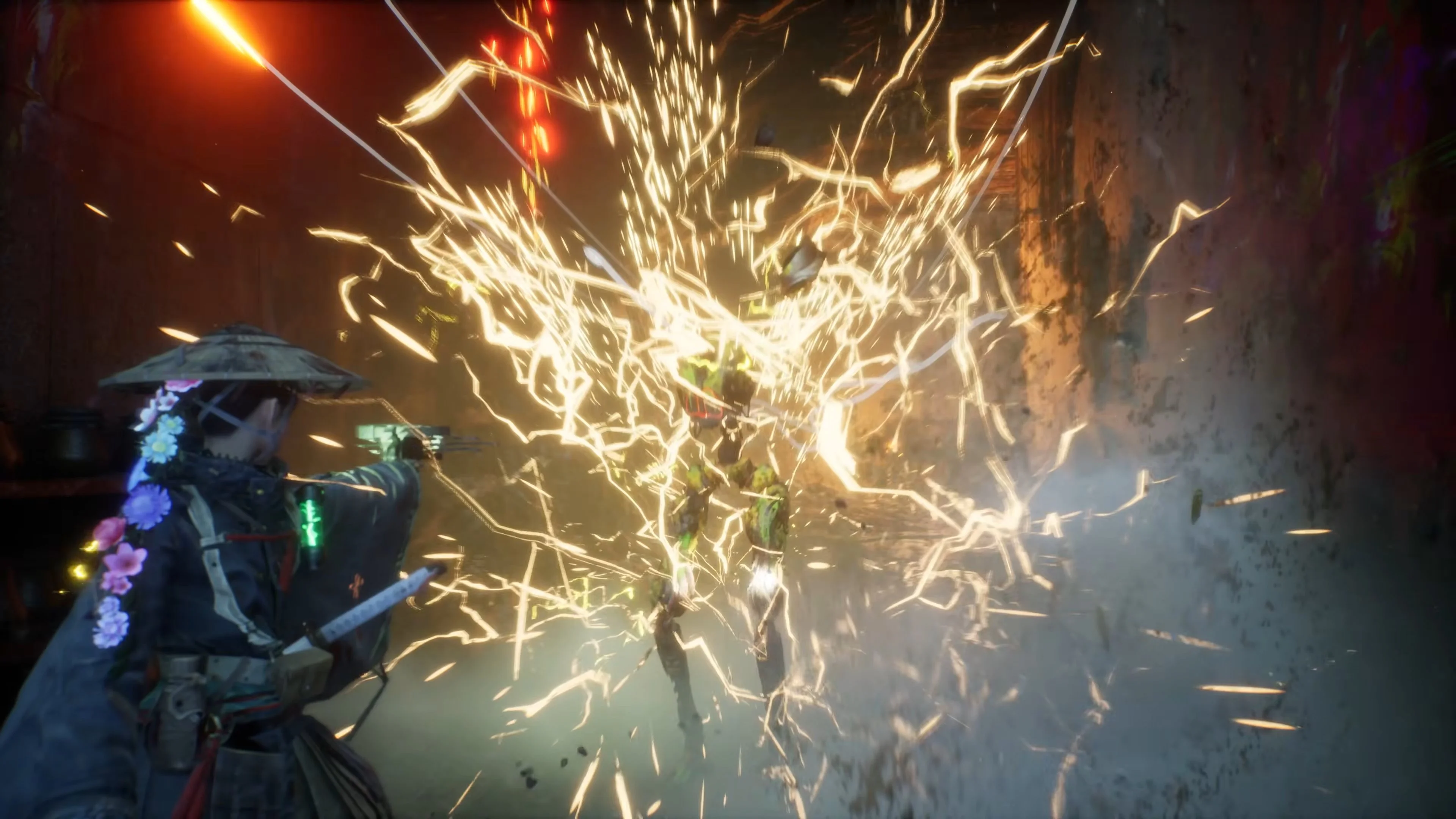
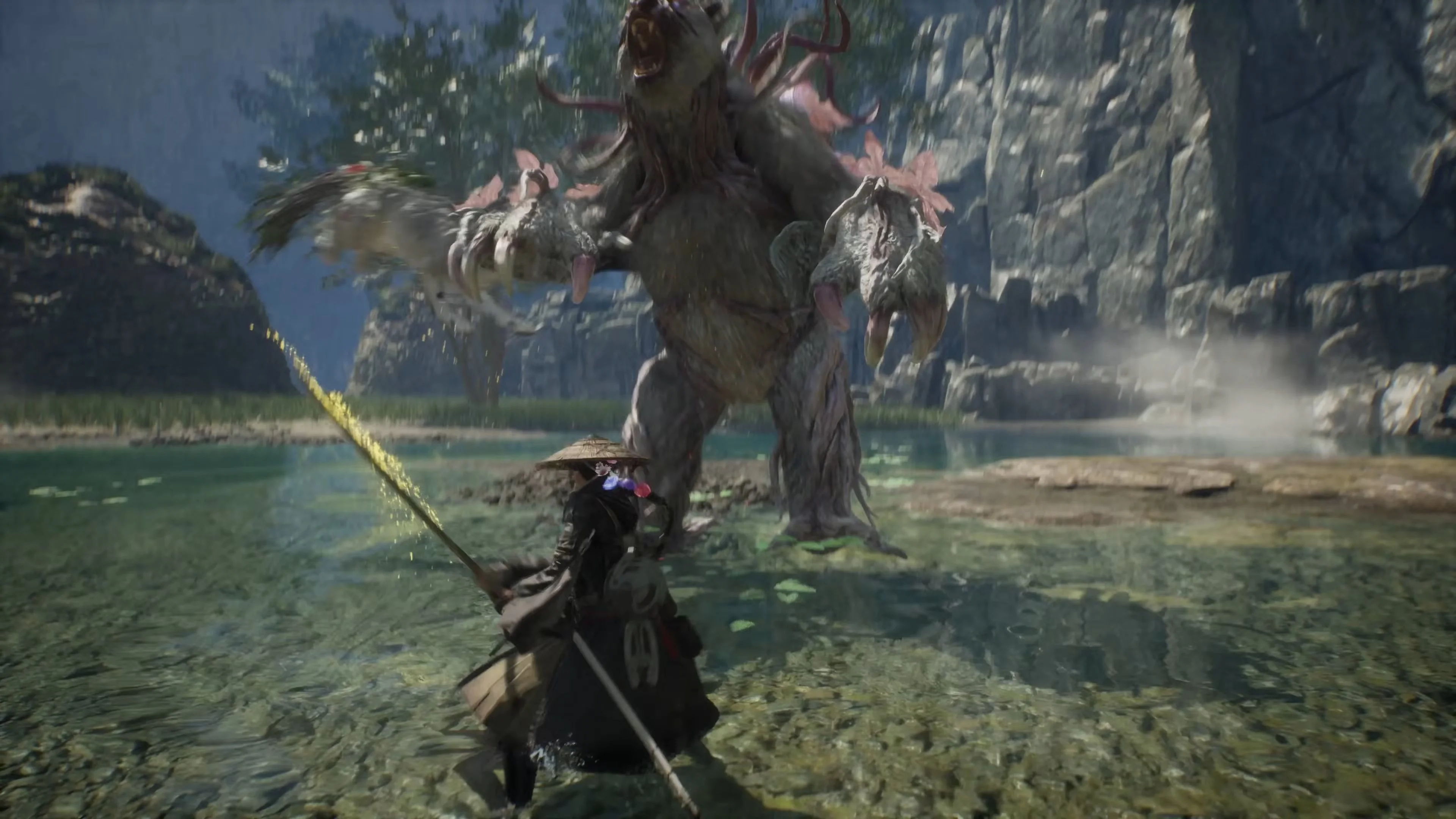
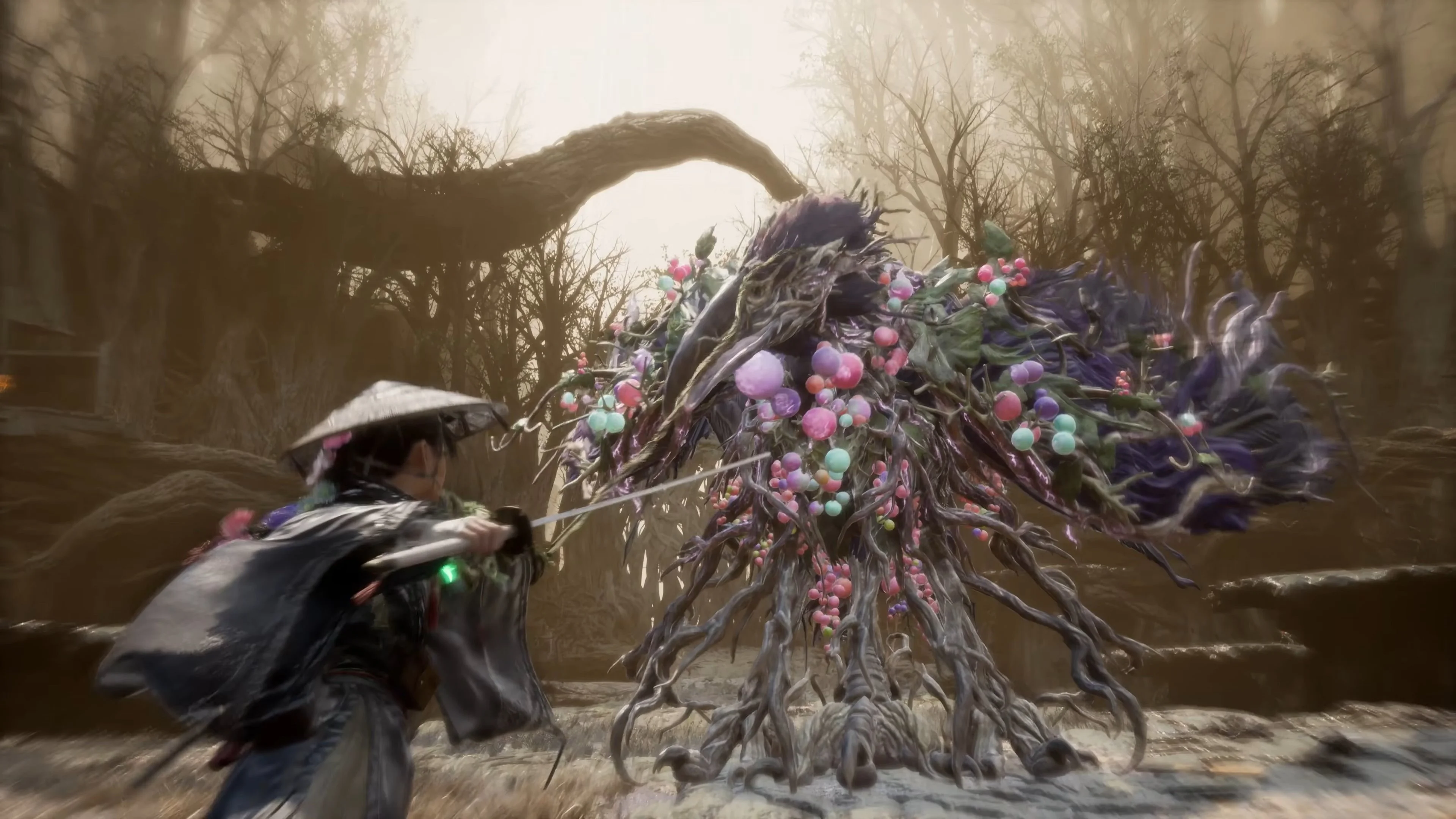
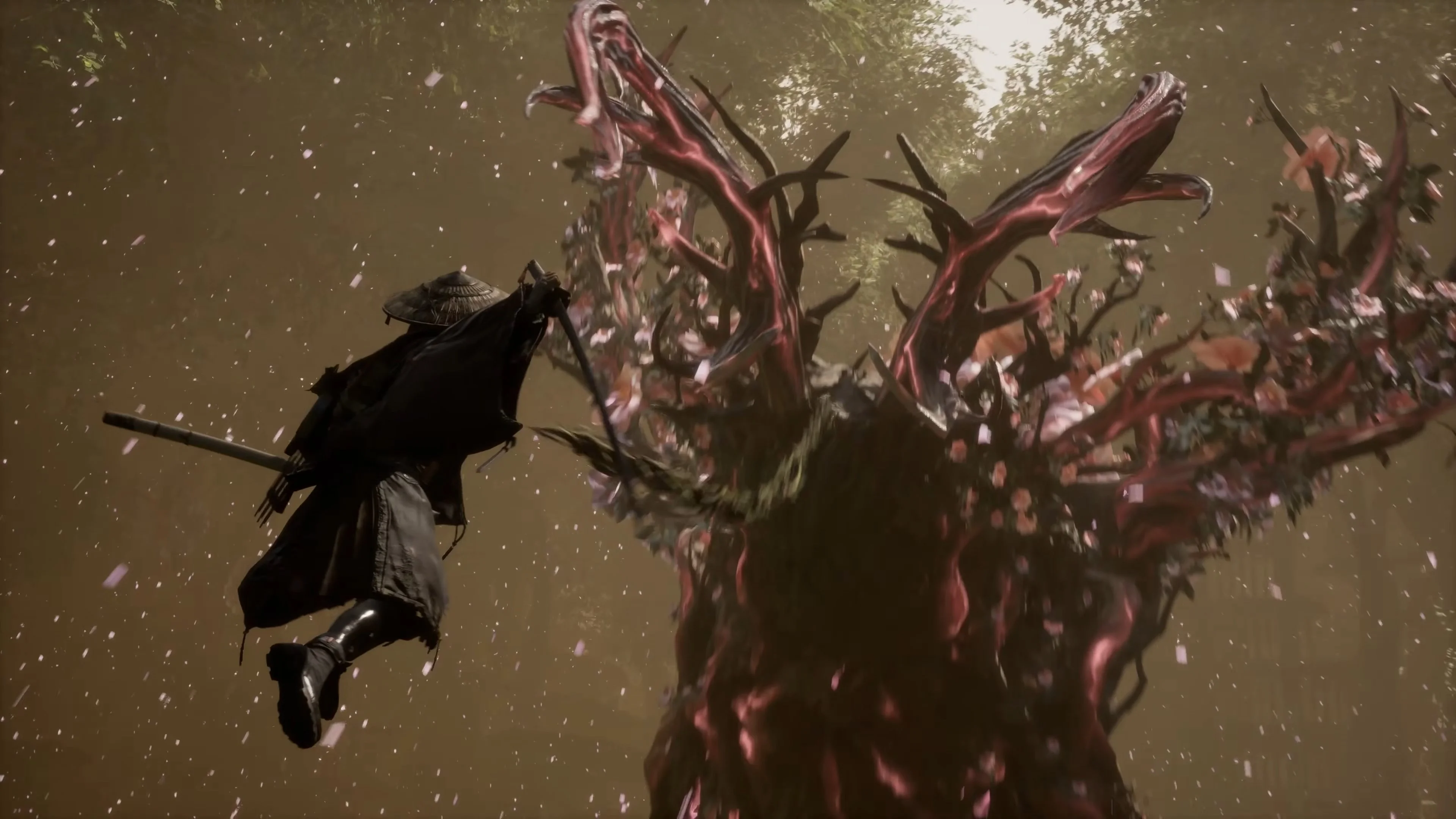
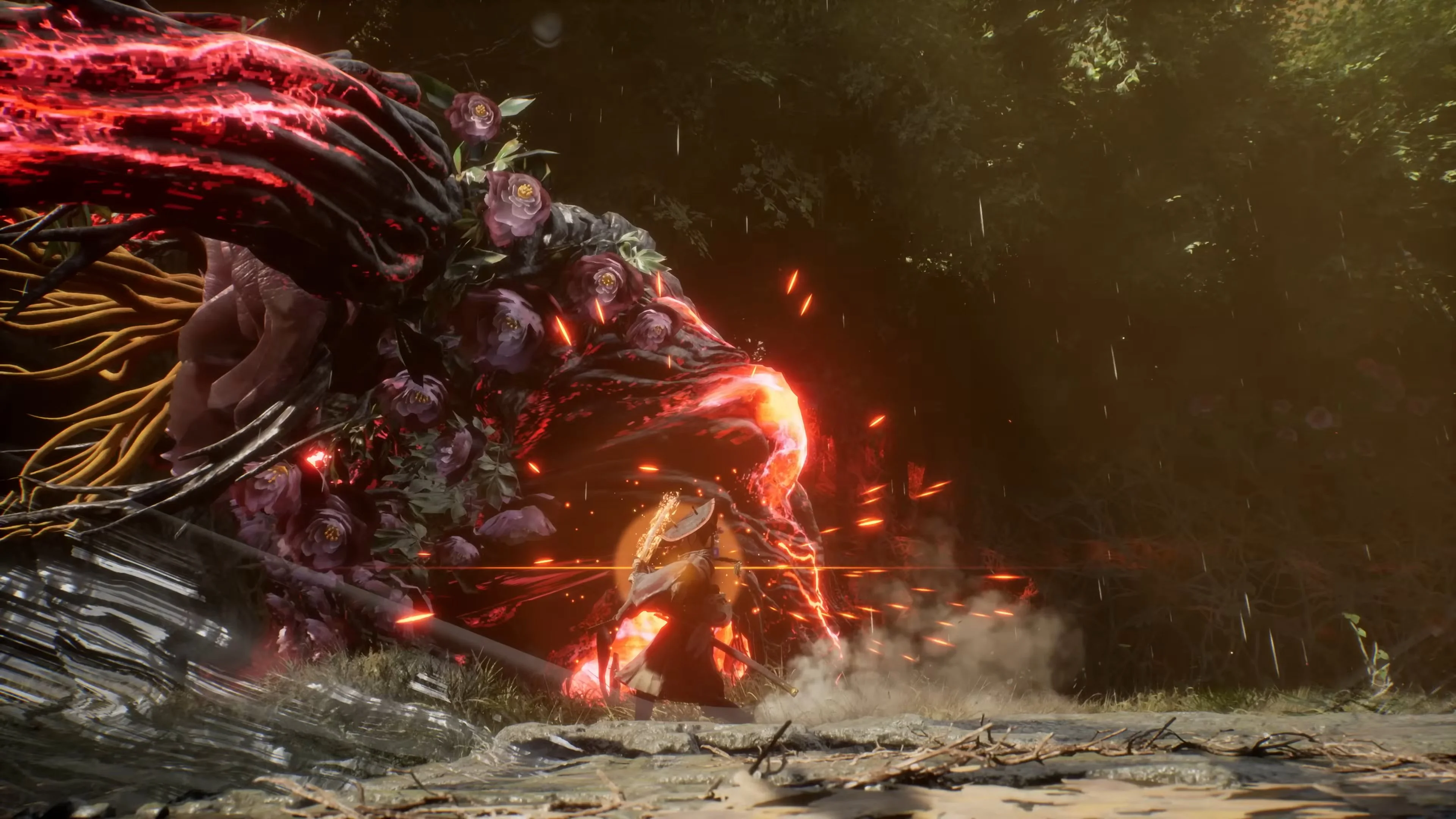
That combination is one of the game's smartest ideas. The comparison to Clair Obscur: Expedition 33 makes sense in the broadest sense: both understand that giving the player moments to slow down and make deliberate decisions can add strategy without stripping away the immediacy of an action game. The problem is that Beast of Reincarnation doesn't always give this system enough room to evolve. For me, the most effective approach eventually settled into two or three reliable Koo abilities rather than encouraging constant experimentation across the full toolkit. By the back half, some encounters felt more optimized than expressive. The foundation is excellent. The game surrounding that foundation doesn't always push it hard enough.
Traversal That Actually Rewards Curiosity
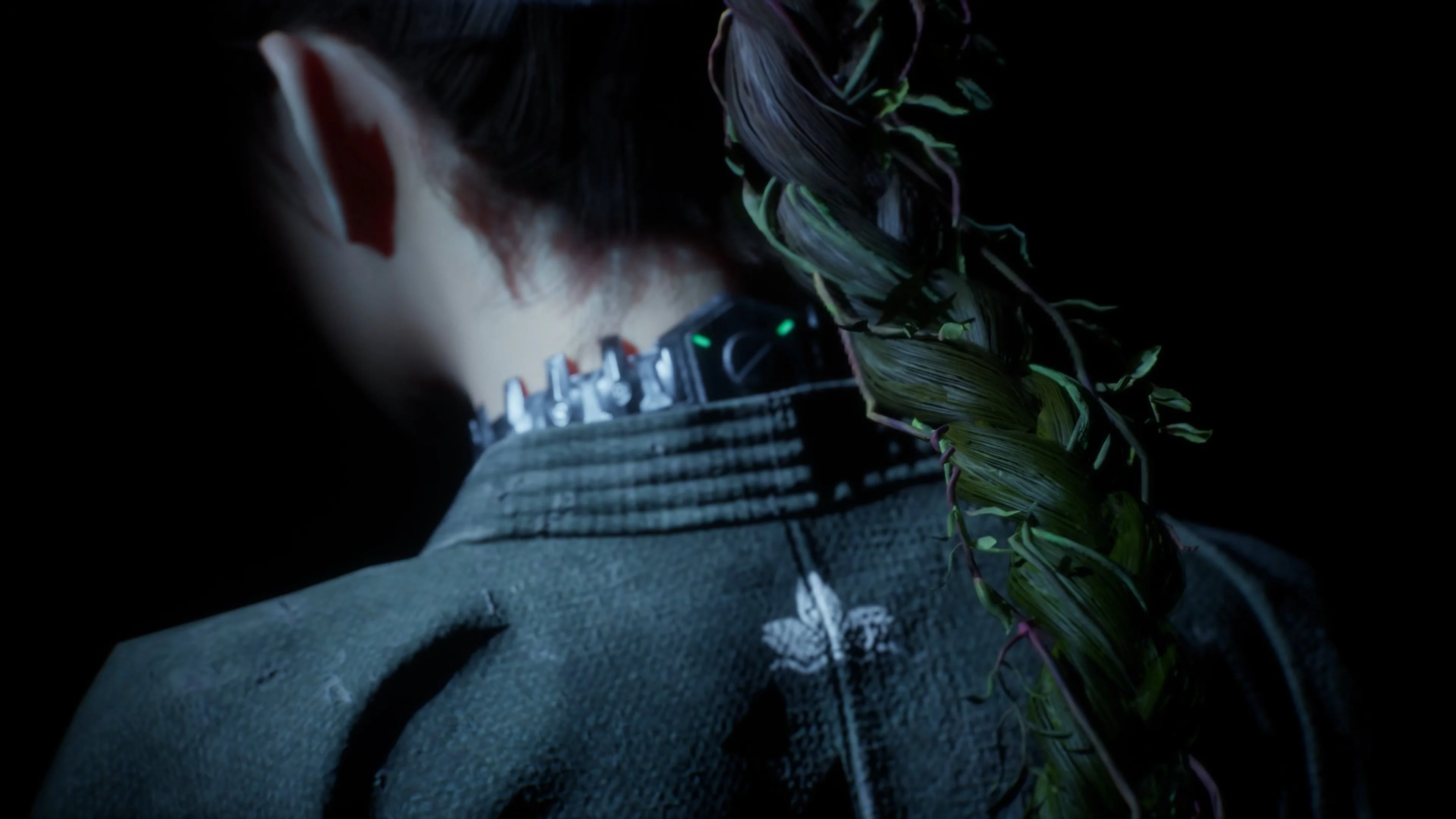
The other genuine surprise is exploration. Emma's vine-based abilities give her hair an almost absurd amount of utility. It can stretch upward to reach ledges, form makeshift bridges and launch her toward distant areas, turning movement from something functional into one of the game's most enjoyable activities.
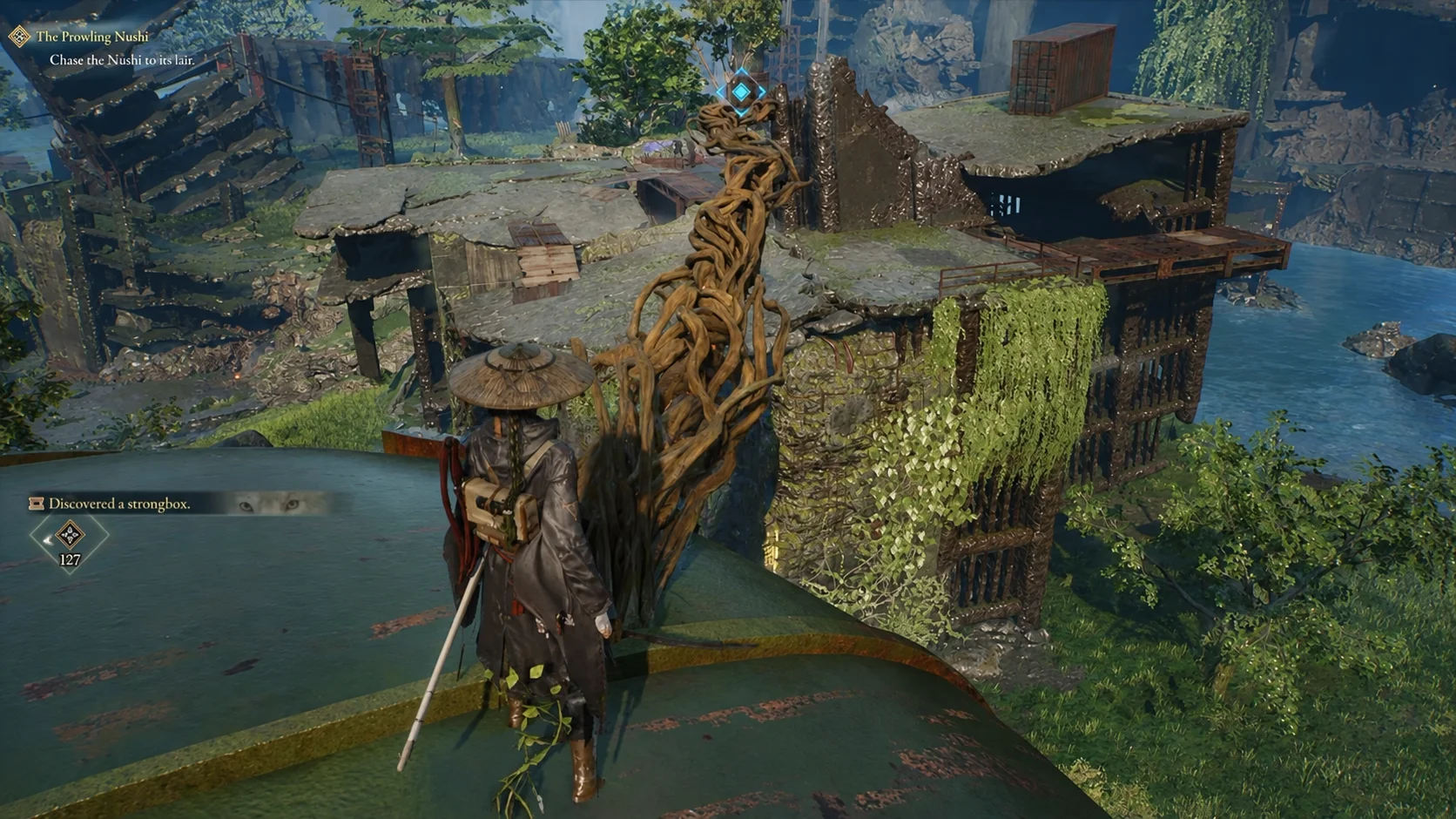
That matters because the environments are designed around it. Swinging between ruined structures, reaching isolated rooftops and finding alternate routes makes you pay attention to the shape of the world rather than simply following an objective marker. Each chapter opens into a semi-open region filled with optional objectives before eventually funneling Emma toward that area's Nushi. Early on, discovering a new traversal ability changes how you look at places you've already passed, creating that satisfying feeling that the map is slowly opening up in your head. For a while, it works beautifully.
Unfortunately, the formula doesn't keep developing at the same pace. By the middle and later sections, the same broad environmental language starts repeating itself: ruined structures, thick vegetation, Blight-covered landscapes and another route toward another Nushi. The world remains attractive, but the sense of discovery gradually gives way to routine.
When Precision Meets Inconsistency
This is where the fantasy starts to crack. A combat system built around precise parries can survive a lot of things. It can't easily survive inconsistent frame pacing. On PS5, the game offers Performance and Quality modes, and the base console version can still experience frame-rate fluctuations, particularly in heavier scenes. Quality mode in particular doesn't always maintain a fixed 30fps target. The problem isn't simply that the numbers occasionally dip. It's that Beast of Reincarnation asks you to trust the timing of every defensive decision. When the game feels less consistent than the combat itself, that trust starts to disappear.
The PC version has its own rough edges. Performance varies depending on hardware and settings, and frame-time or traversal stutter can appear even when the average frame rate looks reasonable. The game isn't necessarily unplayable, but its technical inconsistency makes an otherwise responsive combat system feel less dependable than it should.
Game Freak has already started responding to the criticism. The August 9 update adjusted the camera, changed the default cinematic setting to Performance mode, and reduced some of the repeated affinity conversations that could interrupt the flow of the story. Further improvements were announced as planned, and the studio has publicly acknowledged player frustration with the launch state, committing to continued patches based on feedback. That response is encouraging, but it also highlights the problem: some of these rough edges aren't merely cosmetic launch issues; they affect combat, pacing and the overall polish of the experience. And because the combat is the game's strongest feature, those problems hurt more than they would in a slower RPG.
The Game Runs Out of Tricks
To be clear, none of this makes Beast of Reincarnation a bad game to spend thirty-plus hours with — the combat alone carries more of that weight than it probably should have to. But if performance is what holds the game back technically, repetition is what wears it down creatively, and by the midpoint the two problems start compounding each other.
The first few regions establish a satisfying rhythm: explore, find something optional, learn an enemy, improve Emma, reach the Nushi, and move on. Then the game starts asking you to do essentially the same thing again without giving the formula enough new wrinkles. Enemy variety becomes less exciting than it should be. Familiar encounters return without always demanding a different response, and later sections can feel as though they're stretching a strong opening formula rather than expanding it. Even the Nushi — the encounters that should be the game's major punctuation marks — eventually lose some of their impact when the structure surrounding them becomes predictable.
This is also where the story pacing becomes harder to tolerate. Returning to the central hub can mean being pulled into lengthy conversations that repeatedly interrupt the momentum you've built through exploration and combat. The issue isn't that the game wants you to care about its characters; it's that these scenes often feel longer than the emotional payoff they provide. I kept wanting the game to trust its own best ideas a little more.
Pros & Cons
What Works:
Genuinely excellent hybrid combat, blending Sekiro-style parrying with a tactical, command-based companion layer
Vine-based traversal that makes exploration feel playful and rewarding
Emma's personal arc lands with real sincerity, even within a predictable overall plot
Strong atmosphere, art direction, and a haunting, NieR-adjacent soundtrack
A confident, ambitious new direction for a studio best known for Pokémon
What Doesn't:
Frequent performance issues on both PS5 and PC
Repetition becomes increasingly difficult to ignore in the later sections
Overlong story scenes interrupt the momentum of exploration and combat
A broader plot that leans on predictable beats and an underdeveloped villain
Environments and enemy encounters become increasingly familiar over time
Reviewed on PS5 and PC; the Xbox Series X|S version was not tested for this review.
TheCoreGamer | Staff Review
The Verdict
Beast of Reincarnation is at its best when it simply lets you fight — the parry system, Koo's tactical layer, and Emma's traversal abilities make for an excellent opening stretch. But repeated encounters, familiar environments, overlong story scenes and technical roughness wear that down over thirty-plus hours. A 7/10 reflects that split: an ambitious action RPG with a genuinely great combat system that doesn't always know how to stay fresh — not the reinvention its influences suggest, but promising enough to make a sequel worth watching.
Beast of Reincarnation
Available at Steam
↗ Affiliate link — we may earn a commission at no extra cost to you. Learn more