
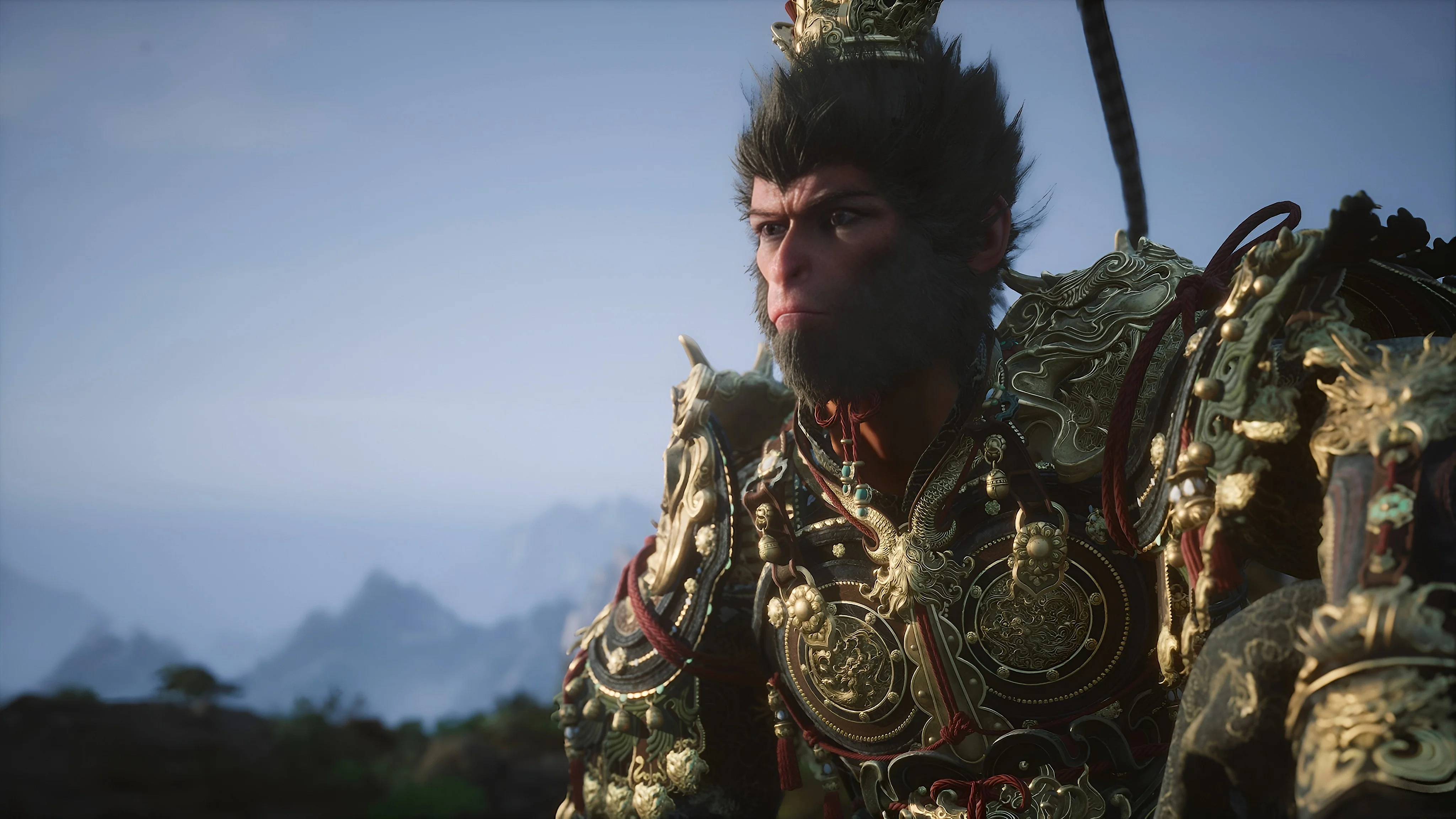
The first thing Black Myth: Wukong asks you to do is watch a god lose.
The opening cinematic drops you into the tail end of Sun Wukong's battle against the forces of Heaven, a fight he's clearly been winning for a long time and is now, just as clearly, about to lose. The Monkey King doesn't go down like a defeated hero. He goes down still fighting, still defiant, surrounded by enemies he's already beaten once. By the time the camera pulls back to frame what's left of him, the scale of what this game is reaching for becomes clear. It isn't a power fantasy. It's a story about what happens after the legend ends.
Game Science built everything here around that idea, and for the most part, they pulled it off. The case for this game is simple: the combat, the bosses, and the presentation are good enough to carry it. The case against it is just as simple: the exploration between those highlights, and the pacing that strings them together, rarely reaches the same bar. Both things are true at once, and neither cancels the other out.
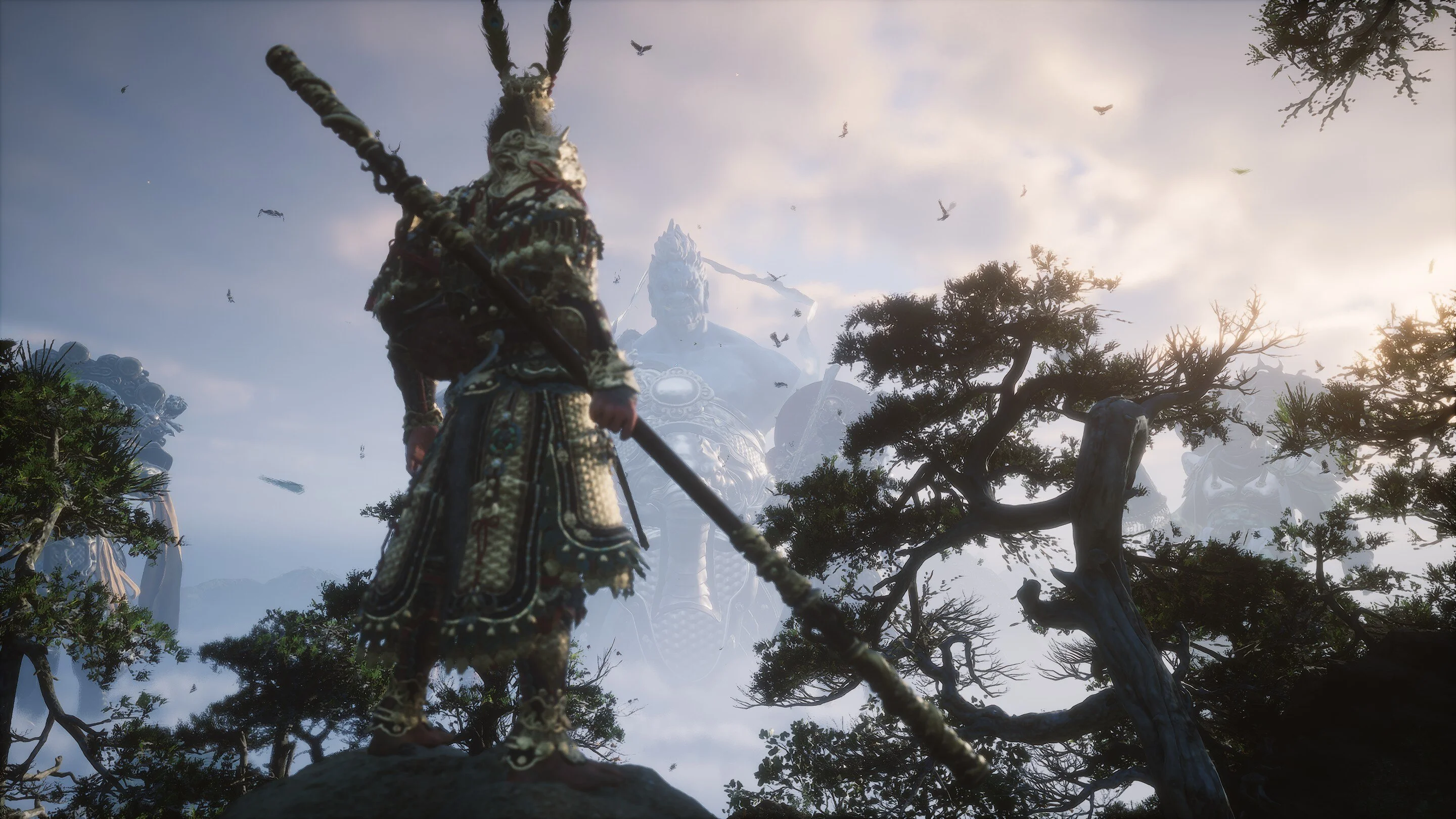
A Mythology Made Playable
Black Myth: Wukong is set five centuries after the events of the classic Chinese novel Journey to the West. Sun Wukong has already fallen. His power has been scattered into six relics. You play as the Destined One, a nameless monkey warrior sent to recover them, chapter by chapter, across six environments that each feel like a world unto themselves.
The bamboo forests of Chapter One give way to the sun-bleached canyon walls of Yellow Wind Ridge in Chapter Two. Chapter Three brings a fire-scarred mountain temple complex. Chapter Four deposits you into a spider estate draped in cold moonlight and silk. Then an underwater realm. Then the Monkey King's birthplace. Six chapters, six distinct settings, none of it feels like reused geography.
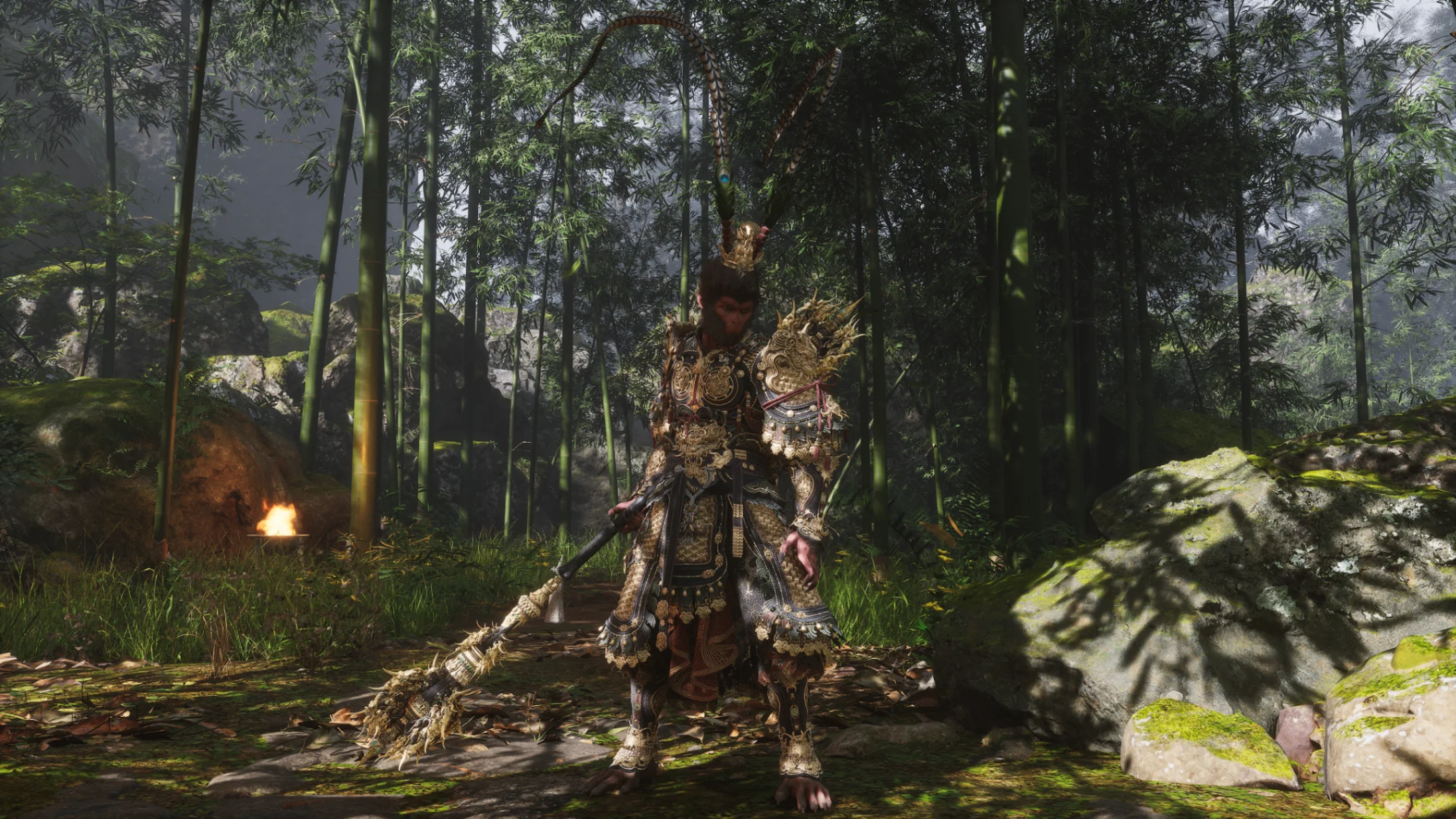
Game Science drew from Tang and Song dynasty aesthetics, Buddhist and Daoist iconography, and the exact visual grammar of the Journey to the West tradition. It feels like the work of a studio deeply familiar with this mythology, rather than one interpreting it from the outside.
How much you connect with the story depends on what you bring to it.
Characters like Zhu Bajie and the Black Wind King are pulled from the source material and treated with real affection. If you know Journey to the West, the game constantly rewards you with context and reframing. If you don't, the Destined One's silence and the lore buried in item descriptions can make the back half feel opaque. The story still earns its ending regardless, but Western players may feel that distance most in Chapters Five and Six, where the narrative leans hardest on prior investment in the source material.
Combat: Staff, Stances, and the Art of the Charged Strike
The combat system is deceptively simple at first and deep by the end, and the distance between those two states is what makes it interesting.
You fight with a staff across three stances.
Smash — the aggressive baseline. Dodging an incoming attack at the right moment opens a brief counter window, letting you cancel straight into a punish instead of resetting neutral.
Pillar — trades raw aggression for reach and crowd control.
Thrust — sacrifices power for speed and repositioning.
The stances don't demand constant switching. You'll settle into preferences fast. But understanding all three changes how you read a fight, and the best players are the ones cycling between them without thinking about it.
Underneath the stances sits the focus system: light attacks build meter, charged heavies spend it. Chip, charge, cash in. It clicks in the first hour and it's still the thing you're optimizing in Chapter Five. The one honest weakness in the system is that light attacks feel like meter-builders more than satisfying hits on their own. The weight of the combat arrives with the charged strike, not before it. The second weakness shows up outside boss arenas: several spells are strong enough to flatten ordinary encounters into a single repeated pattern — Immobilize into a heavy combo, on loop, against anything that isn't a named threat. It's efficient, and after a few dozen hours it's also the reason regular enemies stop asking anything of you at all.
The spells are where things open up completely:
Immobilize — stops a boss mid-combo and hands you a free window.
Cloud Step — plants a decoy while you reposition.
Pluck of Many — splits you into copies that swarm a target.
Transformations — let you assume the form of a defeated enemy, complete with their own health bar and full moveset.
The Transformations are the standout. Early Transformations tied to Chapter One and Chapter Three bosses handle nothing alike, with different range, different rhythm, and a different win condition each time, and every one plays more like a temporary character swap than a reskinned moveset. Deploying one as a last resort with your health nearly gone delivers a specific kind of thrill that doesn't wear out, even fifty hours in.
Checkpoints are generous and death doesn't punish you heavily, so recalibrate if you came chasing Souls-level friction. But if you came for a combat system that rewards mastery without demanding it as the price of entry, Black Myth delivers on that promise.
Every Boss Is Its Own Argument
The game contains more than 80 boss and miniboss encounters, a count that includes optional fights tucked behind environmental puzzles, hidden NPC threads, or paths that look like dead ends. The mandatory roster of major bosses is considerably smaller, but each one has its own design, its own moveset, and at least one phase transition that reframes the fight rather than just resetting the health bar.
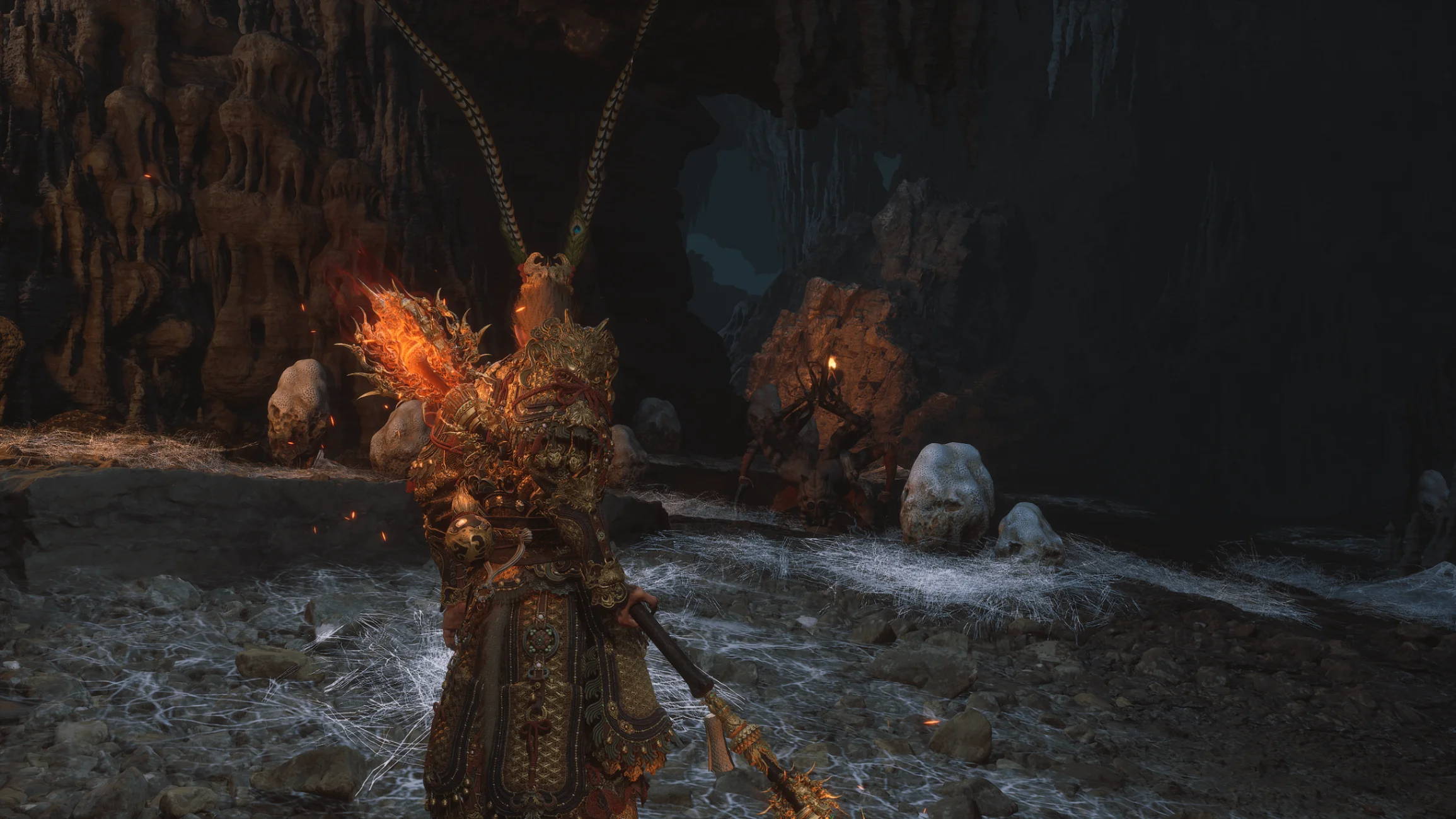
The best of them earn the praise. Phase transitions aren't cosmetic. They come with environmental shifts, new camera framings, and moments built with real dramatic intent. The Chapter Four fight against Yellow Loong, the last and fiercest of the game's four secret Yaoguai King duels, is the clearest example: the fight stops cold mid-battle to let a transformation land, the kind of beat most action games would cut for pacing but Black Myth trusts you to sit with. That single fight also forced a build change on our end — the loadout that had carried us through the first three chapters simply didn't have the burst damage to close out its second phase, and switching toward a Focus-heavy spell rotation was the difference between a five-attempt fight and a fifteen-attempt one.
The late-game secret duel against Erlang Shen, the Monkey King's old archrival, plays almost like a second, smaller story compressed into one fight, without spelling out how that thread resolves. It works because the game has spent five chapters building him up as a name rather than a stat block, so the fight carries weight the moment-to-moment mechanics alone wouldn't earn. These are the moments the combat system exists to service, and when they connect, the game earns the comparison to the genre's best.
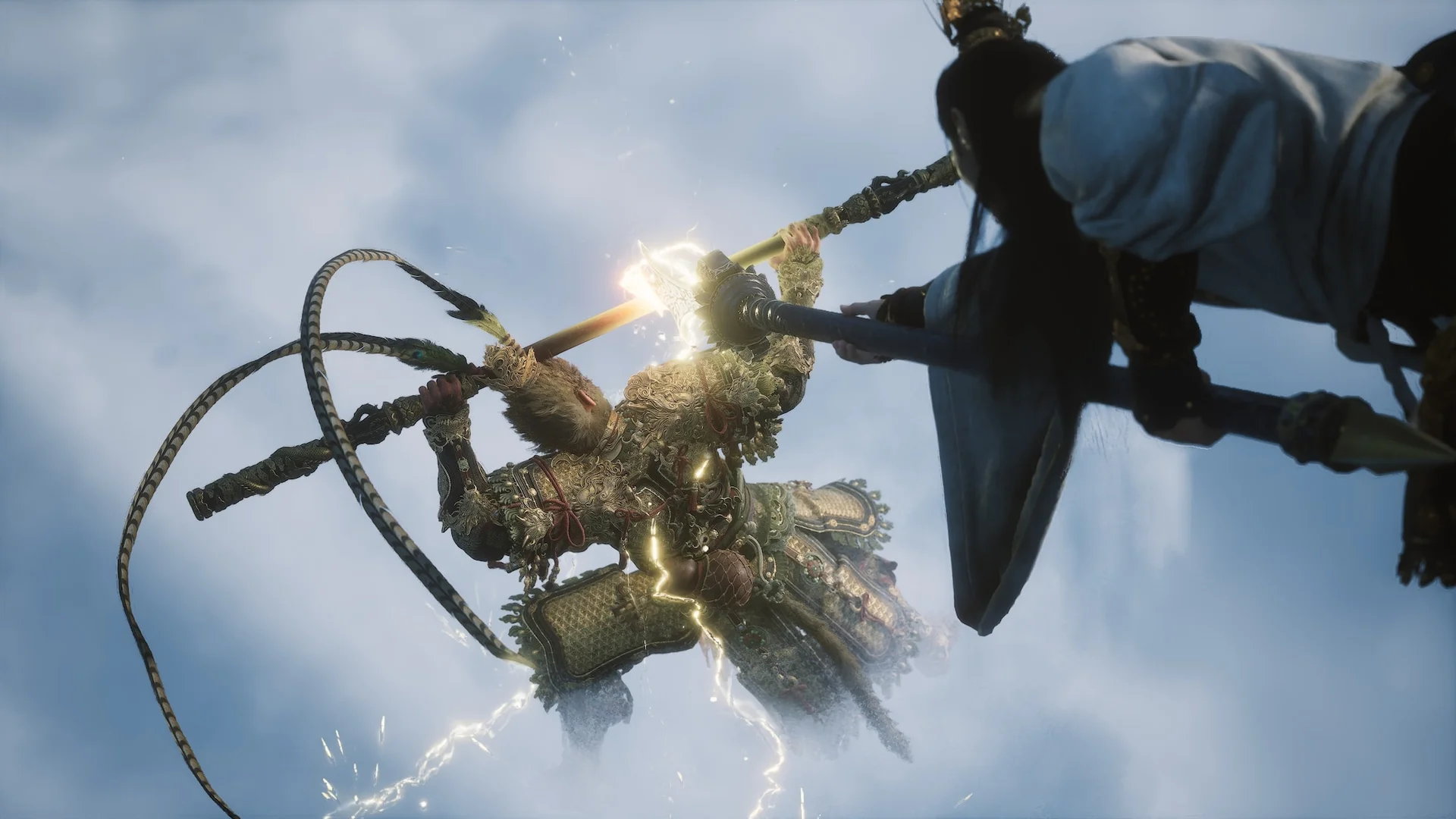
A December 2024 content update added the Gauntlet of Legends, a boss rush mode where previously defeated enemies return with expanded movesets. It's the right endgame addition for a game built around the quality of individual encounters: a way to revisit the best fights with a fully-built character and measure how far your understanding has actually grown. Optional bosses are worth hunting too. Some of the strongest fights in the game are off the critical path, and the Spirits they drop can reshape your build in ways the mandatory route won't.
Chapter Six and the Cost of Ambition
Black Myth's weakest version of itself is the corridor between its best moments.
Outside of major encounters, the game fills its paths with standard enemies: wolf soldiers, stone warriors, generic demons. They're visually interesting the first time. By the third chapter, fighting the tenth variant of the same mid-tier enemy stops teaching you anything and starts feeling like a commute. These fights exist to drop upgrade materials, which is fine right up until your build is settled and the materials aren't ones you need anymore.
That fatigue is a problem spread thin across the whole game. Chapter Six is where it concentrates into something harder to ignore. It's the largest chapter and the most sparse: a wide, open environment with few distinctive landmarks, weaker boss encounters, and pacing that asks you to work harder for rewards that don't feel proportionate. After the inventive density of Chapters Three and Four, it plays like the creative budget ran short before the finish line. In-game maps, added via a post-launch update after their absence at launch was the game's most common complaint, help with getting around, but they don't fix the underlying thinness of the area itself.
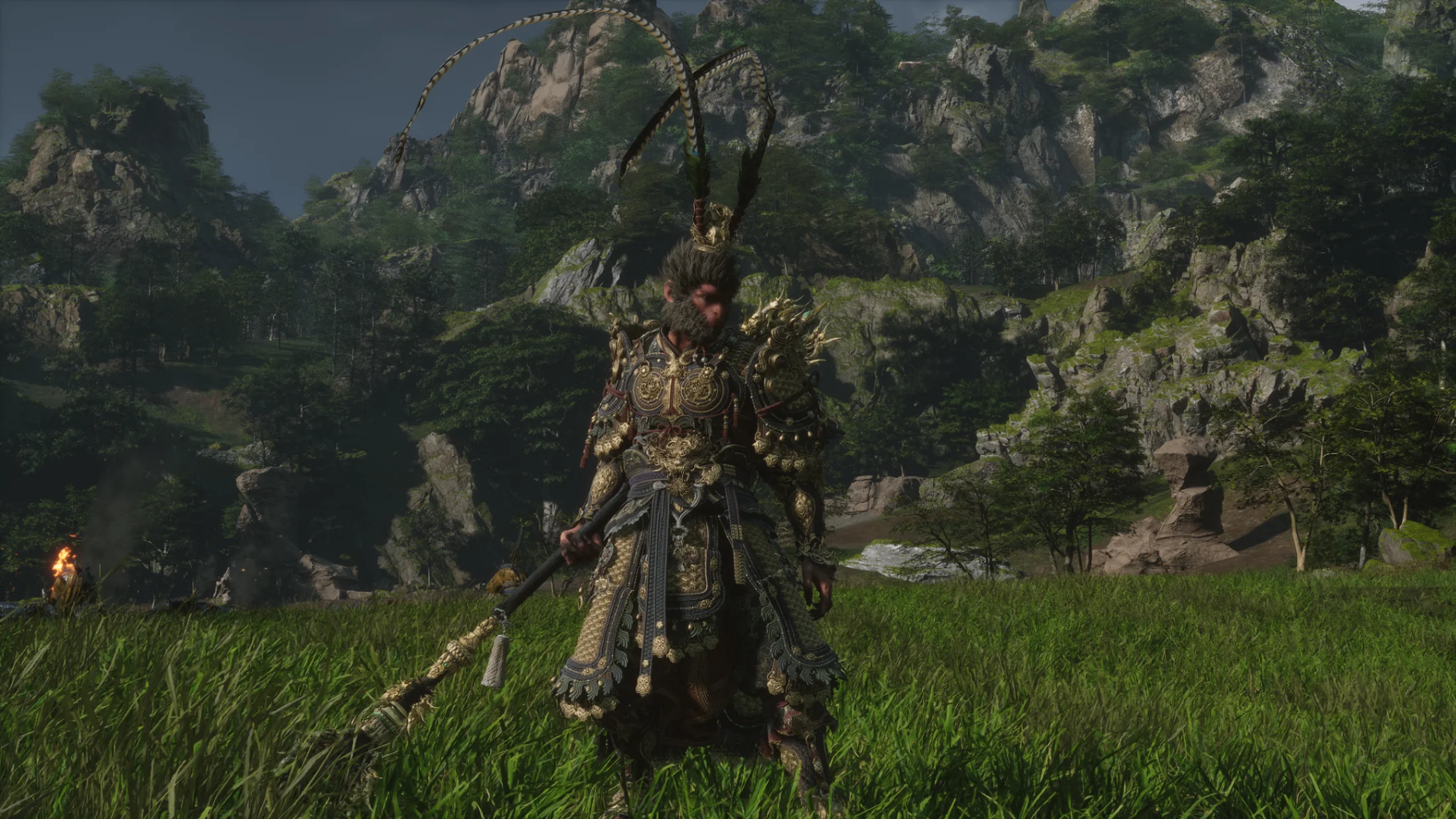
An invisible-wall problem persists across the whole game, too. Paths that look navigable aren't. Ledges that should be reachable don't respond. We lost a genuine ten minutes in Chapter Six circling a rock formation that looked climbable from three different angles and wasn't, before realizing the actual path was a near-identical ledge fifteen feet to the left. It's a minor, consistent frustration in a game that otherwise builds a convincing illusion of a living world, and it's the kind of thing better environmental signposting could have fixed without touching anything about the underlying design.
Among the Best-Looking Games Around
Black Myth: Wukong is one of the best-looking games we've reviewed. That's not a line to write lightly, and it holds up chapter after chapter.
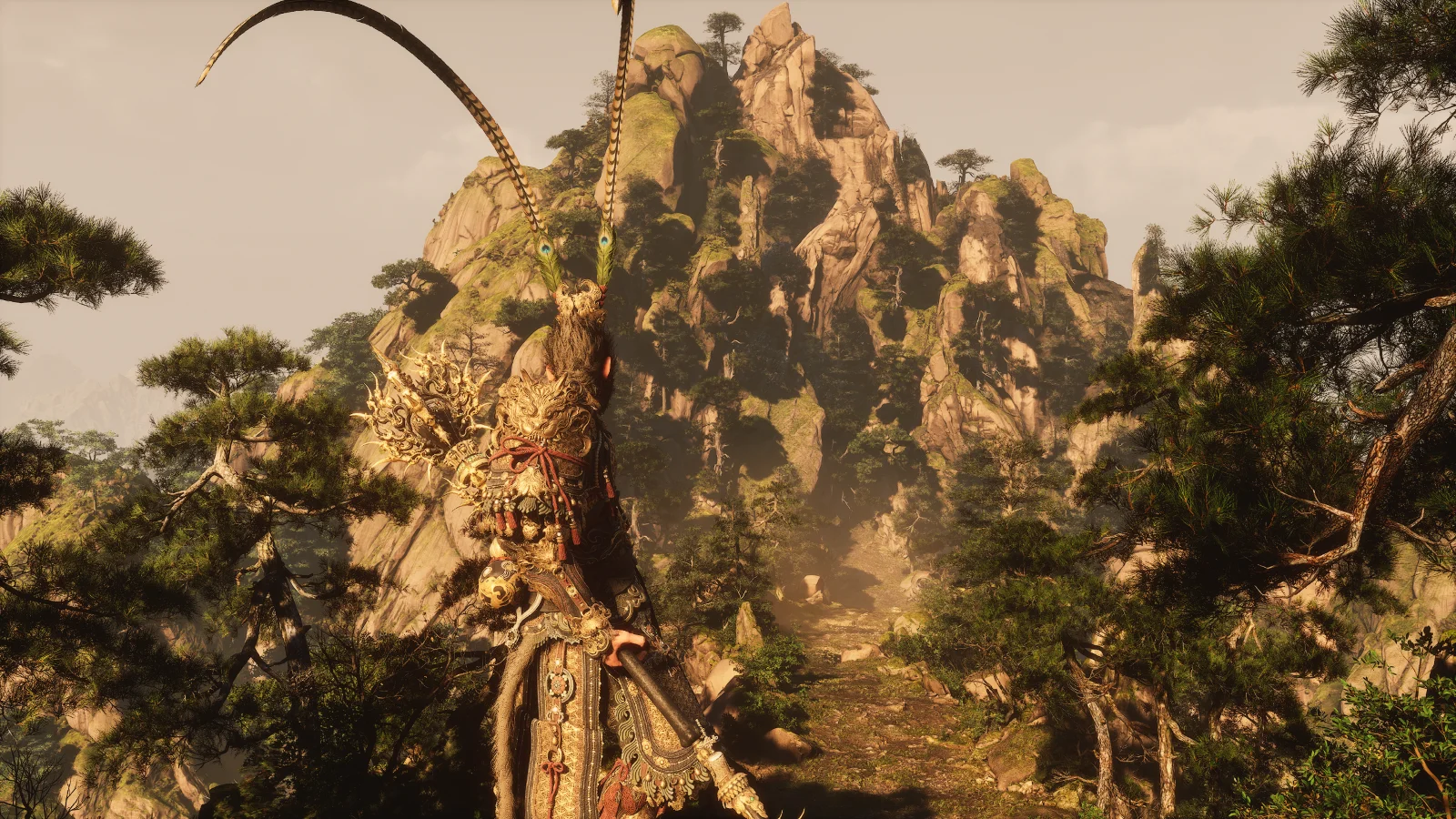
The bamboo forests of Chapter One are dense and atmospheric, light filtering through the canopy in ways that read as physically real rather than rendered. Chapter Four's spider estate, all cold moonlight and silk-draped architecture, is gorgeous and deeply unsettling at once. A coastal canyon late in Chapter Four, bathed in warm afternoon light, is worth stopping just to take in.
The traditional Chinese score, built on erhu, guqin, and pipa, carries that same identity through the audio as completely as the visuals carry it through the environments. During boss encounters it builds into something epic; during exploration it recedes and lets the environment breathe on its own.
On PC, the launch was rough: crashes, stuttering, shader compilation on first load, motion blur artifacts on the player character. PS5 had traversal stuttering in the more demanding later chapters. Game Science's post-launch support has been consistently strong since. The December 2024 update added PS5 Pro support alongside its other features, and an October 2025 update brought AMD FSR4 upscaling, native 60Hz performance mode on PS5, and DLSS 4 stability fixes on PC. The Xbox Series X/S version launched in August 2025, well after most of those patches, and shipped in noticeably better shape than the PC and PS5 versions did at their own launches. (The Xbox version was not part of this review's testing.) The PC and PS5 builds you'd buy today are meaningfully better than what launched in August 2024.
A Landmark That Earns the Word
A June 2026 report from China's Communist Youth League put Black Myth: Wukong's lifetime sales at over 30 million copies worldwide. That's up from 25 million, the figure analyst firm Niko Partners reported in February 2025. Game Science hasn't issued its own updated sales figure beyond earlier milestones, so the 30 million number should be read as reported rather than studio-confirmed, though it's consistent with the trajectory the game has held since launch. What isn't in dispute: it won Ultimate Game of the Year at the Golden Joystick Awards 2024, and Best Action Game plus the fan-voted Players' Voice award at The Game Awards 2024.
For a studio on only its second project, working outside the established Western and Japanese AAA axis, numbers like that don't just reflect quality. They reflect something shifting in how the global games industry operates. Game Science confirmed at Gamescom 2025 that its next project, Black Myth: Zhong Kui, is a separate game rather than DLC, built around a different figure from Chinese folklore. Sun Wukong's story isn't finished as a franchise, but this chapter of it is, and it ends well.
At a Glance
Score | 9/10 |
Great for | Fans of mythology-driven RPGs, boss-rush enthusiasts, anyone chasing spectacular art direction |
Skip if | You need Souls-level difficulty, or zero tolerance for filler trash mobs |
Pros
Six chapters, six completely distinct visual identities — nothing feels reused
Deep, flexible combat system built around stances, focus, and Transformations
80+ boss encounters, with the best fights among the genre's finest
Best-in-class art direction and a score that matches it beat for beat
Consistent, meaningful post-launch support across two years
Cons
Chapter Six is a noticeable step down in density and boss quality
Trash-mob encounters between bosses wear thin by the midgame
Story leans heavily on prior Journey to the West knowledge, especially late
Invisible walls and inconsistent traversal cues throughout
TheCoreGamer | Staff Review
The Verdict
Game Science built this game entirely on its own terms, mythology and all, and got it right. That commitment has a cost: Chapter Six is a real step down from the chapters around it, the combat between major fights wears thin by the midgame, and the story asks things of Western players it never quite explains. Those rough edges don't disappear on a second playthrough. But go back to that opening cinematic — the god who loses, still fighting, still defiant. Black Myth: Wukong is at its best whenever it's asking the same question of its own studio: what do you do after the legend? Game Science built six chapters that look nothing alike, a combat system with real teeth, and boss fights that earn the comparison to the genre's best. The corridors between those highlights don't always hold up. The highlights themselves do. That's the trade the game asks you to make, and by the end, it's one worth making.
Black Myth: Wukong
Available at Steam
↗ Affiliate link — we may earn a commission at no extra cost to you. Learn more