
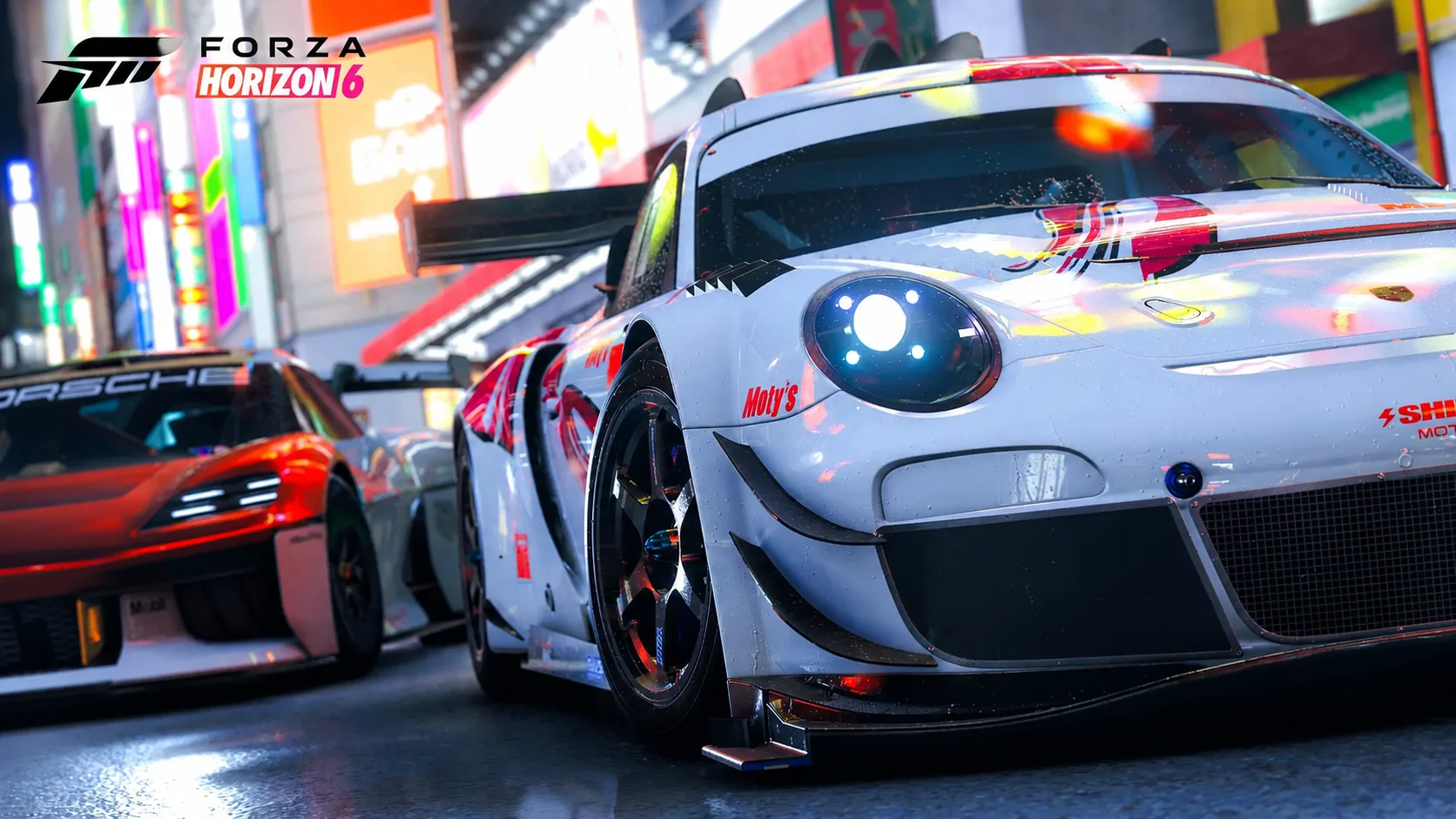
Somewhere between the neon-soaked Shibuya crossing at midnight and a mountain pass above the clouds near Mount Fuji, Forza Horizon 6 stops feeling like a game and starts feeling like a place you actually want to be. That's not a small achievement. Open-world games have been chasing that feeling for years, and most of them confuse scale with presence. Playground Games understood something the others didn't: it's not about how big the map is. It's about whether every road on it has a reason to exist.
Japan has a reason to exist. And Forza Horizon 6, for the most part, knows exactly what to do with it.
Japan Awaits: The Map That Fans Asked For and Playground Finally Delivered
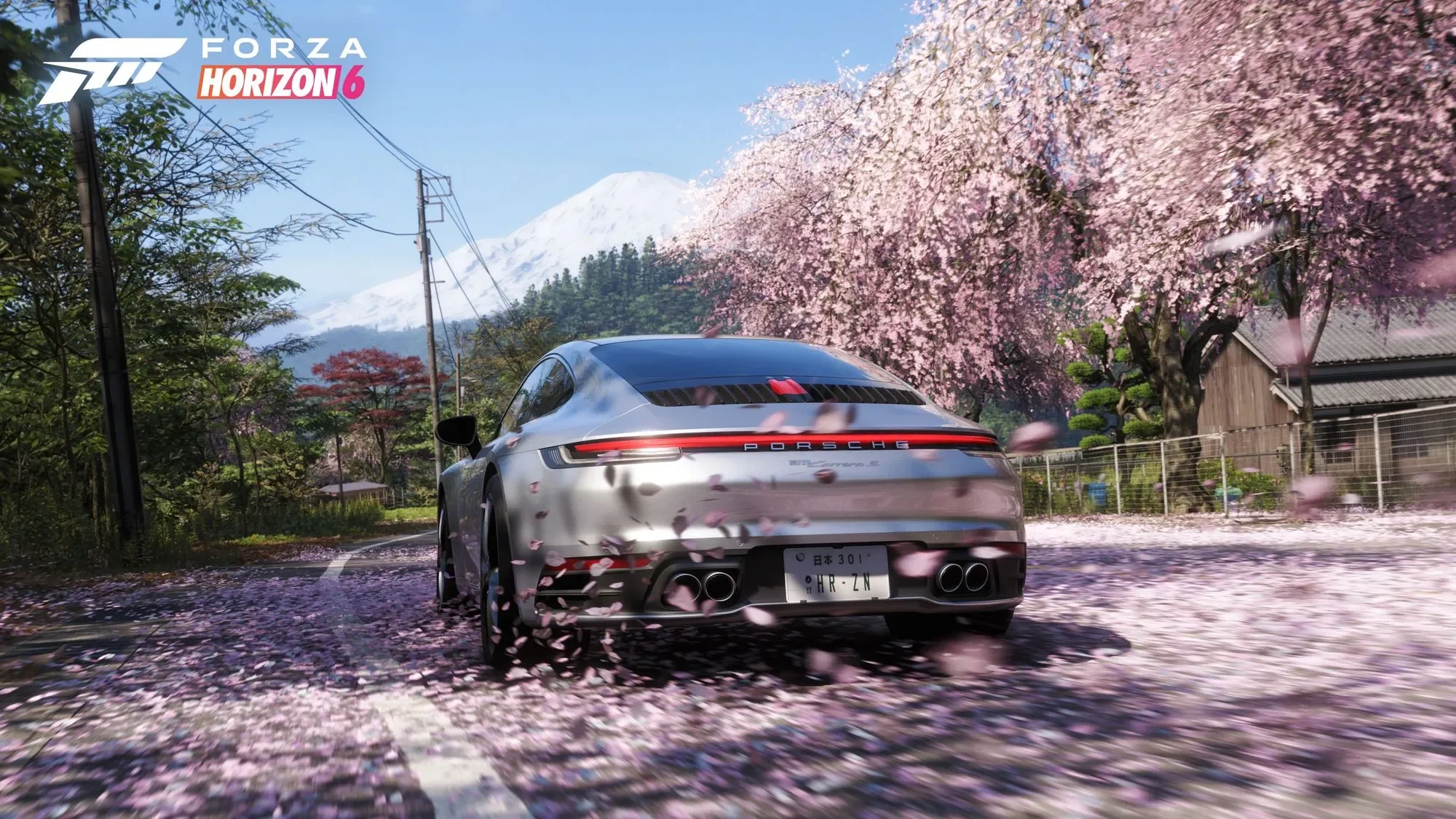
Forza Horizon 6 is set in a fictionalised Japan spanning seven regions, with community mapping putting the total road network at over 670 drivable roads across 74 districts. That number doesn't tell you much until you're actually in it — threading through the elevated Shuto Expressway while Tokyo Tower glows beneath you, or dropping off a mountain highway into a coastal fishing village that has no business being as detailed as it is. The care in the recreation is obvious in the details — this isn't a generic "Japan aesthetic." It's Hakone mountain roads. It's suburban convenience stores and EV charging stations lining routes through residential Tokyo. It's an interpretation with a point of view.
Tokyo alone is five times larger than the biggest urban area in Forza Horizon 5, and the density is earned. The city doesn't just look complicated — it drives complicated. Narrow backstreets require genuine finesse at speed. The Shuto Expressway threads through the city at elevation, demanding you find entry and exit points rather than simply following a straight road. The verticality of the map, which includes ski resorts, mountain passes, industrial docklands, and rural highlands, means that whichever direction you point, the terrain shifts meaningfully within minutes.
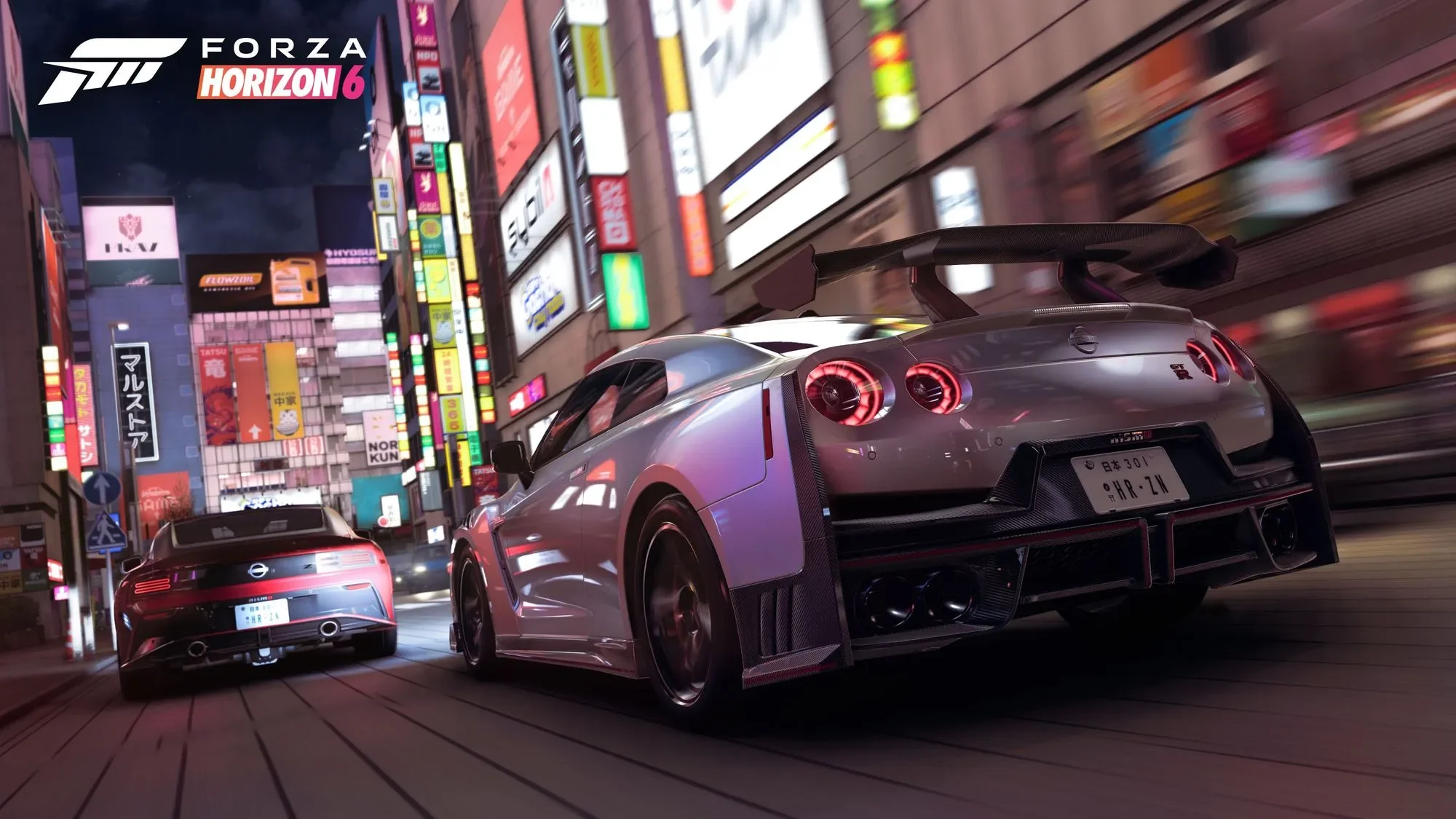
New racing events are built directly around the setting. Touge Battles are 1v1 events on famous Japanese mountain roads — Hakone, Mount Haruna, Norikura Skyline — built explicitly for fans of Initial D and the mountain-pass racing culture Japan is most associated with. Time Attack events blend into the open world without loading screens. Drag Meets reward purpose-built tuning builds rather than stock horsepower. These aren't reskinned versions of existing Horizon event types — they're modes that could only exist in this specific country, and they give the Japan setting mechanical weight beyond just looking stunning.
The one persistent weakness is the story framing around the Horizon Festival. The wristband progression structure works — you earn access to faster cars and higher-spec events by advancing through the ranks, which gives the campaign genuine pacing. The dialogue around it doesn't. Jordy, the competitive-racing mentor character, and Mei, the cultural guide who introduces each region, are likeable enough in concept, but nearly every scene with them resolves into the same beat: excited setup, generic encouragement, cut to the next event. A returning player will recognise the rhythm from FH5's campaign almost immediately. Nobody plays Forza Horizon for the screenplay, but the gap between the world's visual storytelling and its spoken one is wide enough to feel every time a cutscene interrupts momentum you didn't want to lose.
550+ Cars and the Sound of a Properly Tuned Engine
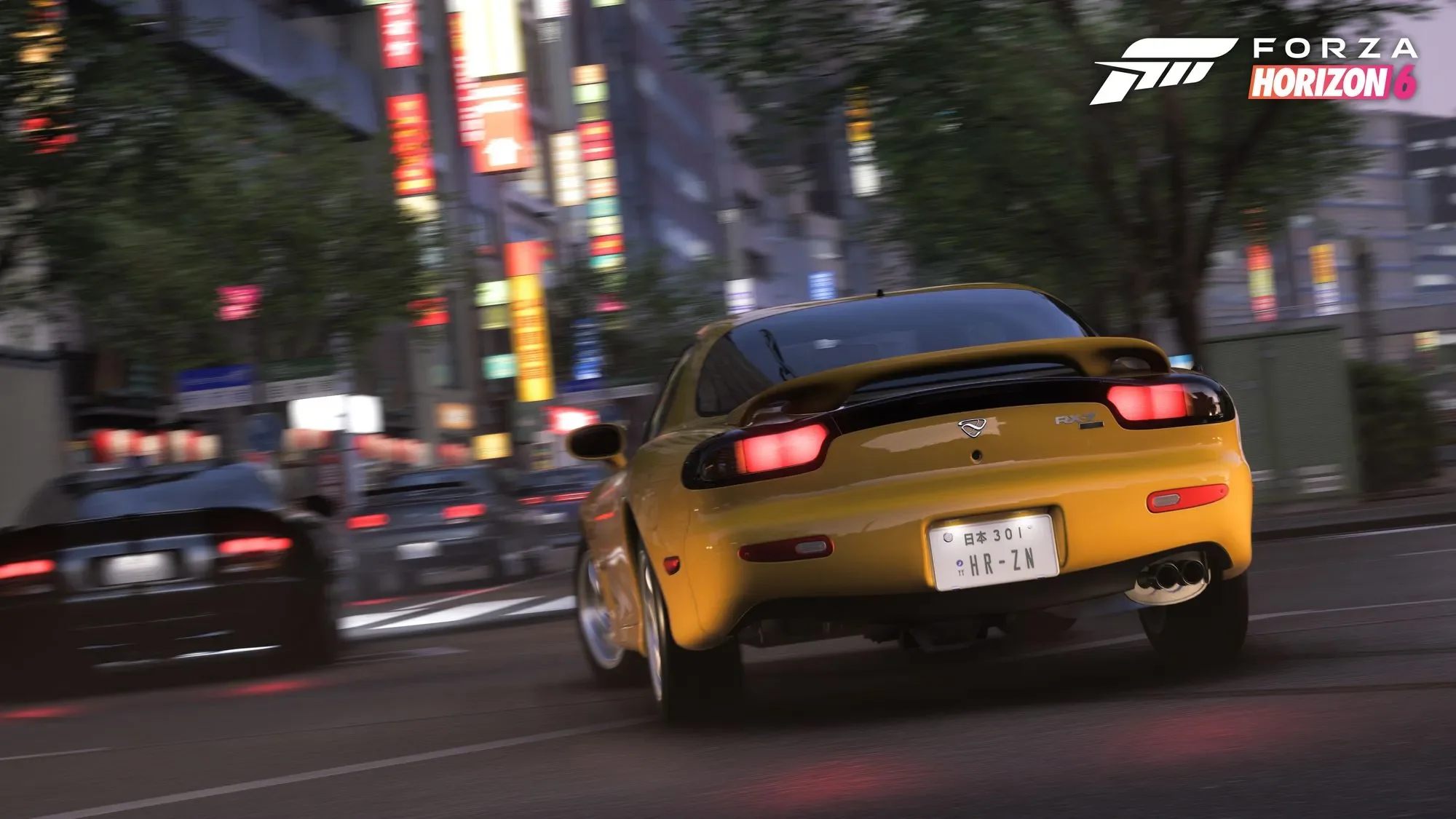
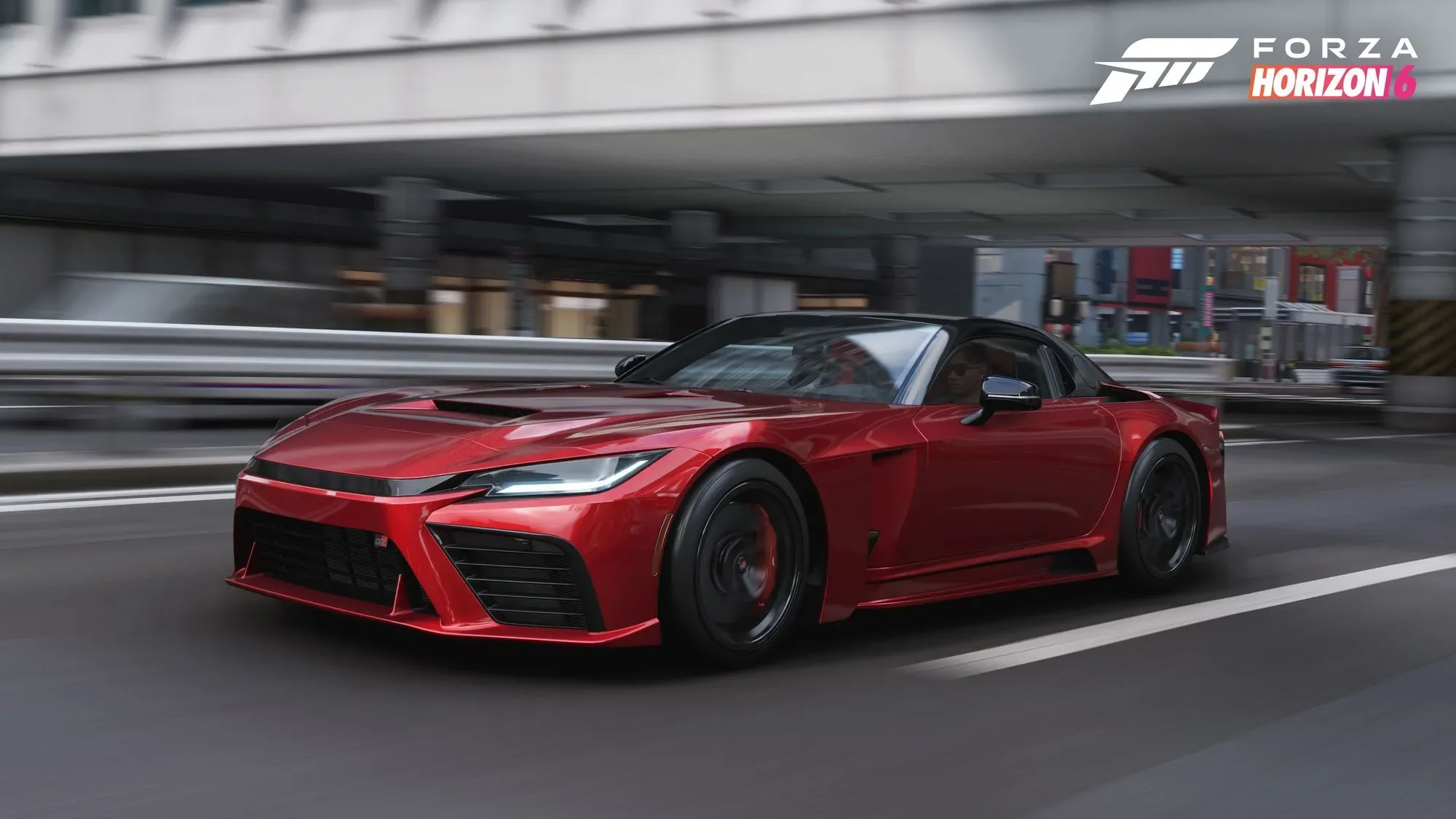
Over 550 real-world cars at launch — a noticeably larger roster than Forza Horizon 5 shipped with — is the kind of number that only lands once you're actually scrolling through it looking for a specific car and finding six variants you didn't know existed. JDM classics anchor the roster with genuine affection: the Nissan Skyline GT-R R34, the Toyota Supra A80, the Mazda RX-7, the Honda NSX-R. These aren't token inclusions. They're presented with the same detail and handling nuance as the hypercars at the top of the list, and in a game set in Japan, driving an RX-7 through the streets of Shibuya at 3am carries a specific weight that a Bugatti simply can't replicate.
Engine audio has been rebuilt with new acoustic modelling technology, simulating how sound interacts with the surrounding environment. The difference is audible. A turbocharged engine sounds different on an open mountain road than it does inside a tunnel. Rain changes the way tyre noise registers. The audio team made a game about driving feel different to listen to, and that's a much harder thing to pull off than it sounds. The soundtrack carries the same ambition — nine radio stations featuring a mix of Japanese artists alongside the genre-spanning selections the series is known for, including a Japanese-language DJ station that does more for immersion than any amount of environmental detail.
Forza Horizon 6 supports ultrawide monitors, NVIDIA DLSS 4, AMD FSR 3, Intel XeSS 2.1, and ray tracing with global illumination. On PC at high-end configurations, this is arguably the best-looking open-world racer available right now. Ray tracing in the rain-soaked city sections produces reflections that don't look like a rendering technique, they just look like wet asphalt. The performance is well-managed: mid-range hardware at 1440p delivers smooth frame rates without needing to compromise significantly on settings. Ray tracing is demanding on hardware, but the standard lighting setup is strong enough that most players won't feel they're missing anything critical.
From Tourist to Legend: A Progression System That Finally Earns Your Time
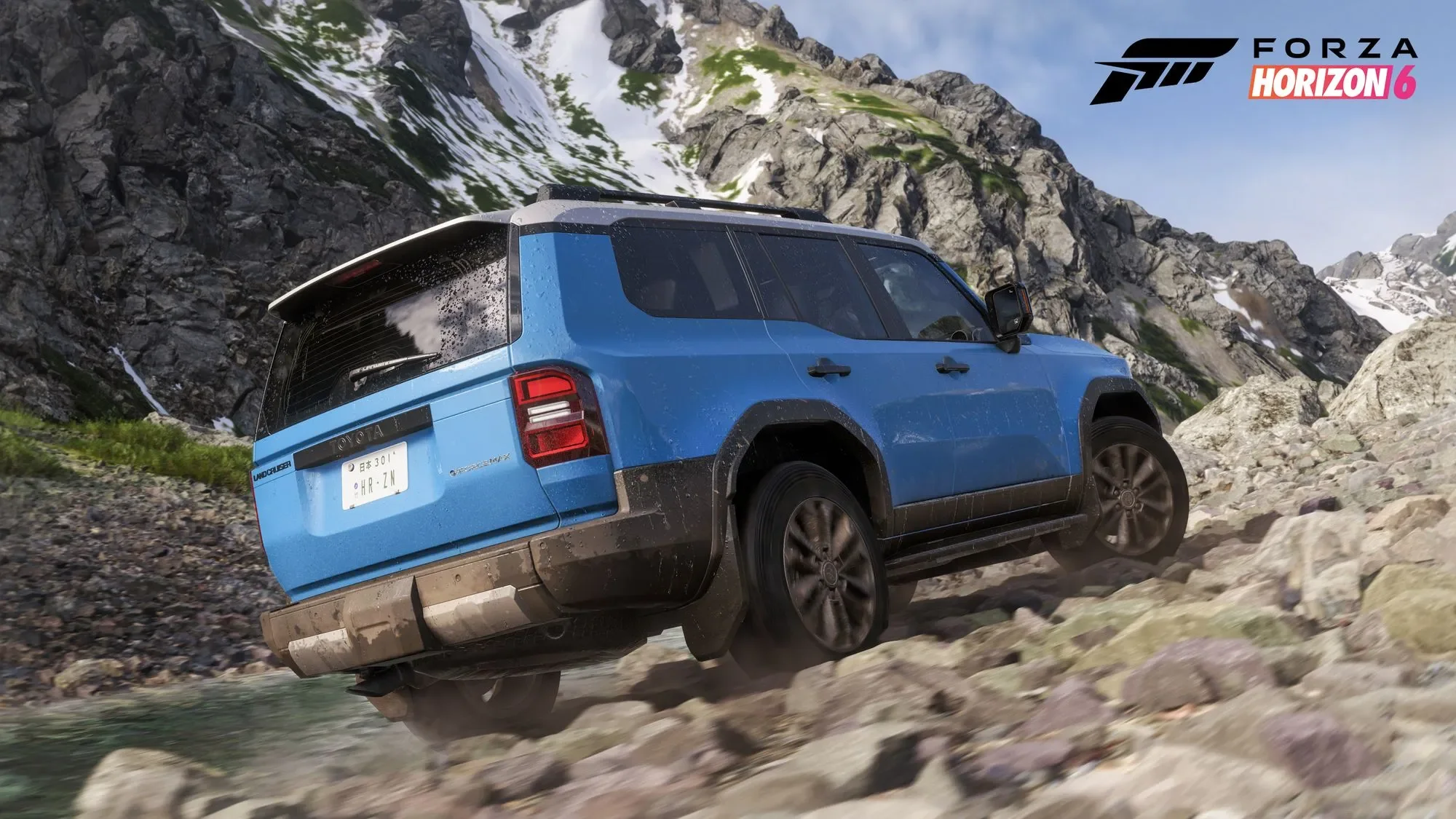
The wristband system is the most meaningful structural change in Forza Horizon 6, and it works better than it has any right to given how simply it's implemented. You start as a tourist with no standing at the Festival, limited to lower-spec vehicles, and earn wristbands by completing events and advancing through the campaign. Each wristband tier unlocks higher-class races and faster car categories. The seventh and final Wristband makes you a Horizon Legend and unlocks Legend Island — an exclusive region with its own events and The Colossus, the series' traditional endgame marathon race, which loops the entire map via the freeway and is billed as the longest event of its kind the series has produced.
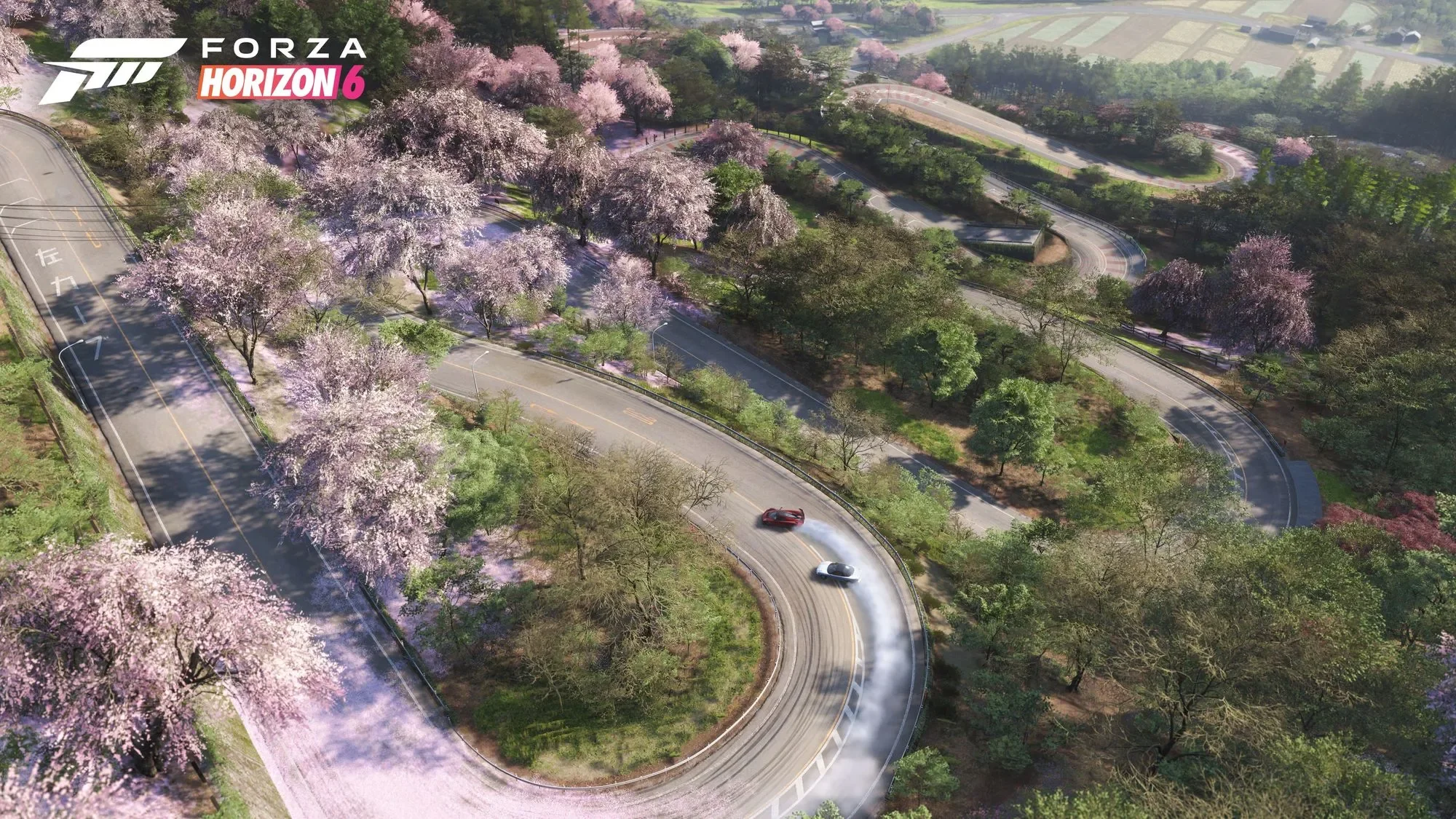
The pacing consequence of this system is that early in the game you're driving cars that match the roads you're on, rather than immediately outclassing everything with a hypercar that makes the map feel small. The mountain roads that define Touge Battles are legitimately challenging in a sports car with 300 horsepower. By the time you're behind something with three times that, you've learned the map well enough to use it. That sequencing — world first, speed second — is the best version of Horizon's campaign design, and in our judgment one of the strongest the series has built since the original Forza Horizon.
The Estate adds a welcome off-track progression system: a customisable mountainside property where players can build garages, decorate with purchased items, and display their car collection. It's a light system but an engaging one, giving a visual record of progress that the wristband screen can't. Car Meets appear organically around the open world — pull up to a gathering in the right car and the community responds. These social features aren't mandatory and they're not intrusive, but the players who engage with them will find Japan feels genuinely populated rather than a backdrop for a racing game.
One quieter addition deserves more attention than it's getting: Forza Horizon 6 is the first game in the series to support full cross-save between Xbox Series X|S, Xbox on PC, PlayStation 5, and Steam. Campaign progress follows the player across every platform rather than being locked to one ecosystem — a small technical detail that matters enormously for anyone splitting time between a console and a gaming PC.
Where Forza Horizon 6 Falls Short
No review of Forza Horizon 6 is complete without addressing its weaker corners. Cross-Country racing remains the least interesting mode in the lineup — the track design around jumps and props continues to feel like something to endure rather than enjoy, and it's remained one of the series' weaker modes since Forza Horizon 3. Loose surface handling doesn't get the same attention the tarmac and touge routes clearly did, and several Cross-Country events feel bolted on rather than designed around the Japan setting the way Touge Battles or Time Attack circuits are.
The rival AI is inconsistent, too. Most events feel fair and well-tuned, but in specific wristband-unlocked races later in the campaign, AI opponents that were well behind the player can suddenly close a multi-second gap on the final stretch. It's not constant, but it's frequent enough to be a genuine annoyance in races where a clean run should have secured the win.
Playground Games Has Never Executed This Confidently
The Japan setting isn't just the most requested location in franchise history — it's the one that best suits what Forza Horizon actually is: a game where the quality of the road matters as much as the quality of the car on it, where the best moments happen between events rather than during them, and where the world earns your attention before you've won a single race. Playground Games has spent fourteen years refining this formula. It shows.
Turn 10 Studios, which has supported car handling work on prior Horizon entries, is credited alongside Playground on this release, and the results are felt in how individual vehicles respond to the specific surface textures built for Japan. Tarmac, gravel, wet asphalt, compacted snow — each surface communicates differently through the controller, and that tactile information shapes driving decisions more noticeably than it did in earlier entries.
In our time with the game, the handling model sits in familiar Horizon territory — accessible over simulation-grade, built to let a controller and an assist-heavy setup feel competent within minutes. But the margins feel tighter than they did in FH5. Weight transfer under braking reads as more pronounced, particularly in rear-heavy JDM builds like the Supra or RX-7, where trail-braking into a hairpin genuinely rotates the car rather than just scrubbing speed. Grip loss on wet tarmac ramps up more gradually than we remember from the previous game, giving a longer window to catch a slide before it becomes a spin. Tuning still lets you push a car well past what feels "realistic" if that's your preference, but on default settings, a stock hypercar and a stock kei car drive like distinctly different machines, with a clearer gap in behaviour than we noticed between comparable pairings in FH5. It's not a simulation, and it never claims to be one, but the gap between a well-tuned car and a poorly-tuned one feels wider and more legible than in the previous entry, which makes the Estate's tuning tools feel more purposeful than optional.
The tuning menu itself covers the ground you'd expect from a modern Horizon entry: gear ratios, suspension stiffness, camber, aero balance, and differential settings are all adjustable, alongside a broad visual customisation suite covering body kits, widebody conversions, paint layering, and vinyl liveries. None of this is new to the series, but it's implemented cleanly here, and the option to browse and download other players' shared tunes and liveries in-game means you can skip the deeper end of the tuning menu entirely and still end up with a car that's properly set up for the road you're on.
Pros & Cons
What Works:
Japan is the most detailed, purposeful map Playground Games has ever built
Touge Battles, Time Attack, and Drag Meets are genre-specific modes that couldn't exist anywhere else
550+ cars with genuine handling nuance, not just cosmetic variety
Rebuilt engine audio that makes driving sound different depending on environment and weather
Wristband progression finally reintroduces meaningful pacing
First in the series with full cross-save across Xbox, PC, and PlayStation 5
What Doesn't:
Cutscene writing and Horizon Festival dialogue feel hollow and marketing-brief generic
Story interruptions occasionally break the otherwise excellent driving flow
Cross-Country events remain one of the series' weaker modes, still true since FH3
Rival AI can show noticeable rubber-banding in specific wristband-locked races
Reviewed on PC. Available now on Xbox Series X/S and PC via Steam and Microsoft Store. PS5 version confirmed for later in 2026. Available on Xbox Game Pass Ultimate and PC Game Pass from day one.
TheCoreGamer | Staff Review
The Verdict
Forza Horizon 6 is the series at its most confident and its most coherent. Japan is the best map Playground Games has ever built — not just the largest, but the one that most completely earns your curiosity. Every region has its own texture. Every road type has a reason. The Touge Battles, the Legend Island payoff, the wristband structure that reintroduces meaningful pacing — these are the right decisions made at the right time. The story dialogue is still weak and Cross-Country still drags, but none of that touches the experience of dropping a perfectly tuned AE86 into a mountain pass at midnight while the soundtrack does something unexpected and the headlights catch rain. There's nothing else like it. There hasn't been for fourteen years.
Forza Horizon 6
Available at Steam
↗ Affiliate link — we may earn a commission at no extra cost to you. Learn more